
Law firms
Marketing for Personal Injury Lawyers
The most competitive legal market there's, decided in the days after an accident by whoever the injured person reaches first.
Who this is for
Somebody was in a wreck on Tuesday. By Friday they’ve retained a firm.
Personal injury is the most competitive market in local search, and everybody in it knows. Firms with budgets you’ll never match are bidding on the same words in the same city, which makes it tempting to conclude there’s no room. That reads the market backwards.
The person who was hurt on Tuesday isn’t running a procurement process. They’re sore, they’re worried about work, and somebody has told them to call a lawyer. They search, they call two or three, and they retain whoever picks up and sounds like they’ve done this before.
Which means the fight isn’t against the biggest advertiser in the state. It’s about being one of the three that shows, and being the one that answers.
Why this practice is its own challenge
You’re not competing on billboards. You’re competing on the next four days.
The window between an accident and a signed retainer is short and it closes quietly. Nobody tells you they called somebody else.
That has three consequences, and each is a marketing problem rather than a legal one.
They find three, and they call all three
The list gets built on a phone, often from a hospital bed or a sofa.
They dial straight down it.
Being second on that list costs you almost nothing.
Being unreachable costs you the case, and you’ll never learn it existed.
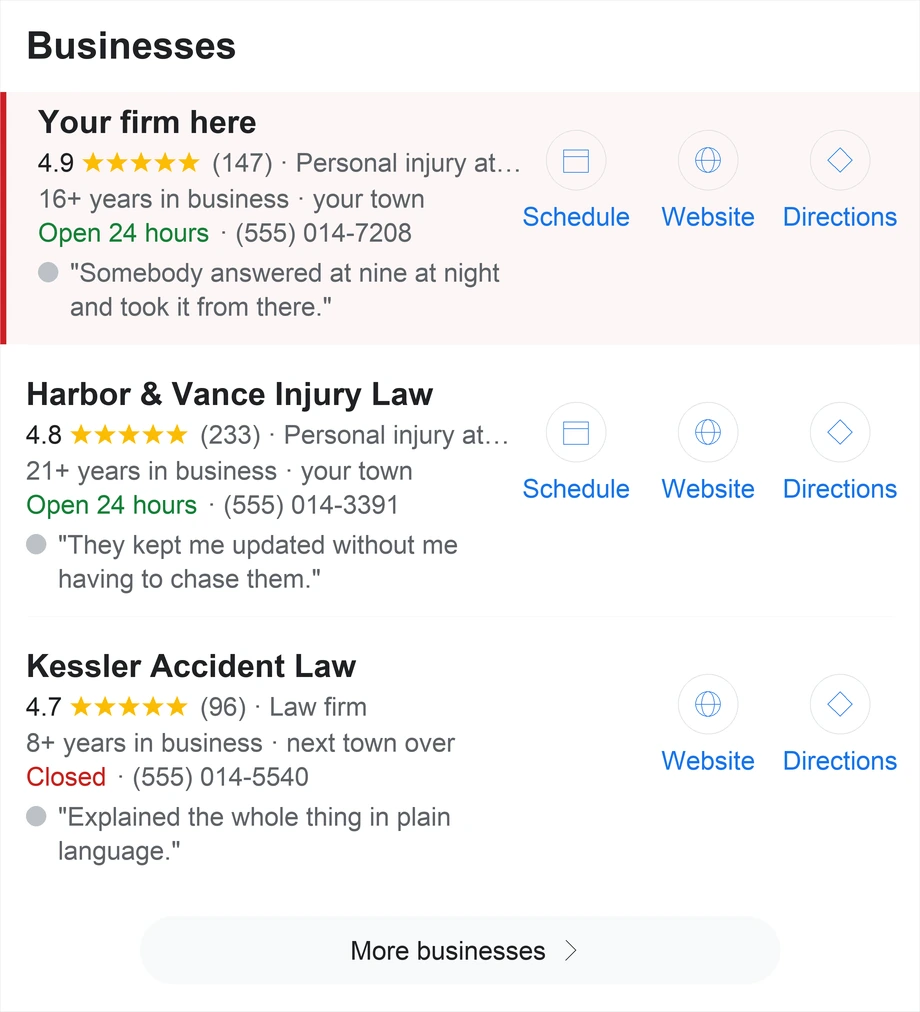
An unanswered call is a signed case somewhere else
Every other part of this costs money to improve. Answering costs a decision. A great deal of this work arrives in the evening and at weekends, which is exactly when most firms send callers to voicemail.
The planned half matters too: a client who wants to think about it for a week retains whoever stayed visible while they thought. Staying in front of somebody who already looked at you costs a fraction of reaching them the first time.

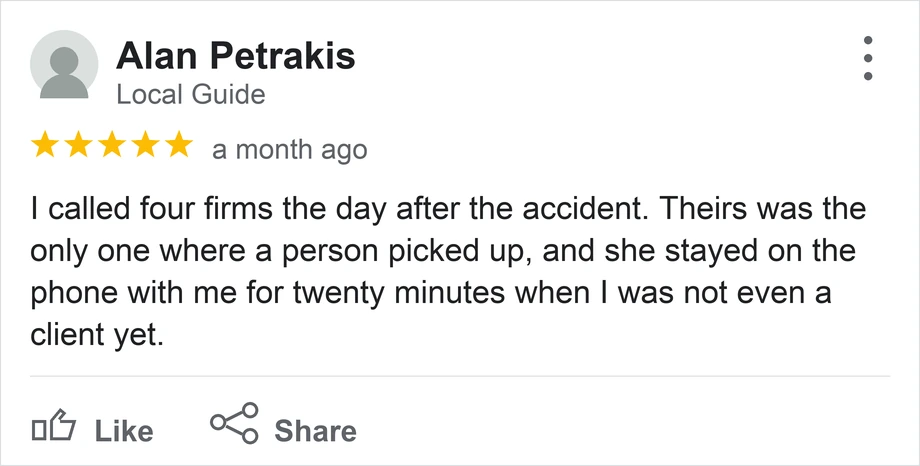
Reviews are read for whether you were reachable
Somebody choosing a lawyer can’t evaluate legal work and knows it. What they can read is whether other people felt informed and could get hold of their attorney, which is the complaint that dominates this practice area. Below about four stars most people simply stop considering you, which BrightLocal’s 2026 consumer survey puts at 68% of consumers, from 1,002 US adults.
The defensive half matters as much as the offensive one. One unanswered review saying nobody returned a call for three weeks is doing more damage than a month of advertising can undo.
The economics
One signed case can be worth more than a year of everything on this page.
That single fact changes what a thin month costs you, and it’s why firms that treat marketing as a fixed overhead tend to underspend on the part that actually signs cases and overspend on the part that looks like advertising.
Contingency sharpens it further. You carry the cost of every matter that doesn’t sign, so the difference between reaching people who were going to call a lawyer anyway and reaching people who never were isn’t a marketing distinction. It’s the whole margin.
Which is also the argument against buying attention broadly. The person searching for a lawyer after an accident has already decided to hire one. Everybody else is expensive to reach and worth very little when you get there.
Where a personal injury firm usually starts
Answer the phone, be on the map, then be remembered.
Almost nobody should buy all of it at once, and for personal injury the four-day window sets the order.
In the order it usually makes sense
Everything we do is listed here, and how pricing works is on the homepage, including why we won’t quote a number before we’ve looked at your business.
Straight answer
When this isn’t the right call.
If you can’t take on more matters
Leave this alone. Signing work you can’t staff produces missed deadlines and the reviews that follow them, and in this practice those are hard to undo.
If nobody answers after hours
Then start there and nowhere else. This work arrives in the evening and at weekends, and everything else here delivers those callers to a phone nobody picks up.
If somebody promised you the number one spot
We aim at the top three positions in the maps in Google and keep you there, for what people actually search. Nobody can honestly promise the top spot.
On the list more often, and one case can carry a quarter.
You’re on the list more often, and more of the calls that reach it get answered by a person. In a practice where one signed case can carry a quarter, that’s a very short path between the work and the money.
You’ll see it in two numbers you can count without us: how many calls came in, and how many contact requests came from your website. Not website visitors, not a bunch of fancy, multicolored charts and graphs in a ranking report.
No long-term contract. You stop at the end of the month on almost everything; search is the one exception and takes sixty days’ written notice, because it’s booked ahead.
Frequently Asked Questions
The things worth asking before you buy.
Can you get us to the top of Google for personal injury in our city?
Yes, into the top three of the local map pack, and we keep you there. That's the block of three businesses that shows above the ordinary results with the map beside it, and it's where the calls come from. You don't need to be first. You need to be one of the three.
The one thing we won't promise is the number one spot, because a position moves with who's searching and where they're standing. Anybody selling you number one is selling you a screenshot.
A ranking promise only means something if it answers two questions: for what, and where. For what, because it's easy to rank a business first for a phrase nobody types, and that's how a ranking guarantee is usually kept. We go after what somebody actually searches when they need you today. And where, because a business ranks in a shape around its address, not everywhere at once. For most that's somewhere between three and seven miles out, depending on how tightly Google draws the map where you are.
And you'll know without taking our word for it. You count the calls and the contact requests from your website. Search takes somewhere between thirty and ninety days to show. If it hasn't, give us our sixty days' written notice.
Read more on this topic: Why the promise is legal, and still worthless
What if we want to reach further than three to seven miles?
That's the right ambition and usually the wrong first move. Widening the shape you already have is most of the ongoing work, and every street that comes inside it's people who couldn't see you before and can now. Reaching past it before the near ground is saturated spreads the same money thinner over people who were never going to call you first anyway.
When you genuinely do run out of room, the next move is another area rather than a bigger radius. We build the same shape around an adjoining town, and that repeats for as many areas as you want to take on. There are more advanced ways to push reach as well, and they're worth spending on at that point rather than at the start.
The only real gate is whether you can take the work. We'd rather hold you at one area that's producing than spread you across three that are half fed.
Read more on this topic: Why you rank differently on the other side of town
The big firms outspend us enormously. Is there any point?
There's, and it's the wrong comparison. You're not trying to beat a statewide advertiser on budget. You're trying to be one of the three businesses that shows on a map to somebody a few miles from your office, which is a much smaller fight and one that spend alone doesn't win.
After that it comes down to who answers. A firm with a fraction of the budget and a person on the phone signs cases that a firm with a billboard and a voicemail box doesn't.
Our website has to follow state bar rules. Does that limit what you can do?
It shapes what goes on the page, and those rules are yours rather than ours. We build what you tell us is within them, and we'd rather ask than assume. Nothing about being findable or answering the phone runs into them.
Where it does matter is claims: what can be said about outcomes, and how testimonials and case results have to be handled. Tell us your state's position and we work inside it.
What if we can't keep up with the extra intake?
Then don't buy this yet. Signing matters you can't staff produces missed deadlines and the reviews that follow them, and in this practice area those are very hard to undo. Staff first. This is the one situation where the honest answer is to wait.
Read more on this topic: Who this is wrong for
Book a call
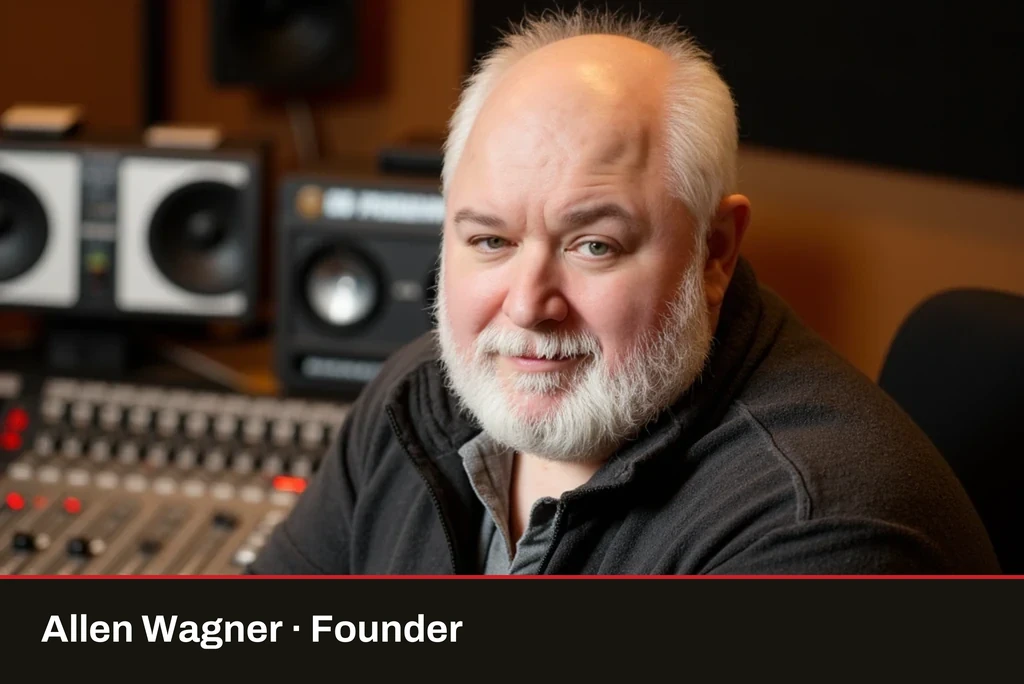
“I'd love to learn about you and your business.”
Ten minutes, and it's mostly me asking what you do, where you do it, and what you've already tried. No pitch deck, no discovery fee, no sales pressure.
Send the form on the rightbelow and I'll set up a call. If we're not a fit I'll tell you right up front and do my best to point you in the right direction.
Call me instead (360) 467-6957