
Because five pages can only answer five questions, and people don’t search in five questions. They search for one service, in one town, with one worry attached, and the site carrying a page for that exact question is the one that gets found. This is the long version of a question on the page about authority websites, where the short answer is the same one.
The number sounds arbitrary until you count what a local business actually needs a page for. Then fifty turns out to be the floor rather than the ambition.
Where fifty comes from
It isn’t padding, and it isn’t the same page rewritten with the town swapped. It’s three groups.
One page per service you offer. Not a list on a services page. A page for each, saying what it involves, what it costs or what decides the cost, and who it suits. Most trades have eight to fifteen of these once they stop bundling.
One page per question people ask before hiring. How long it takes, whether they need permission, what happens if something goes wrong, why one quote is double another. These are the pages that catch somebody who isn’t ready to call yet, which is most people.
One page per place you work. Somebody searching in the next town over isn’t served by a page about your whole county.
Count those honestly for any real business and you land near fifty without inventing anything.
What a five-page site is actually missing
A homepage, an about page, a services list, a gallery and a contact form describes the business. It doesn’t answer anybody.
Somebody arriving with a specific problem finds a page that mentions their problem in a list of eleven others, and nothing that engages with it. They leave, not because the business is wrong for them, but because there was nothing there to read.
The competitor with a page on exactly that problem gets the call, and it isn’t because they’re better at the work.
What changed, and why the number went up
Something is now answering on the customer’s behalf.
A machine summarizing an answer needs a source that states the thing plainly. It doesn’t summarize a services list well, because a list isn’t an answer to anything. A page that says what the work is, where it’s done and what it costs is a source it can actually use.
That isn’t a separate job from ranking well. The pages that get cited are the pages that were specific, which are the same ones that ranked. But it does raise the cost of being vague, and a five-page site is vague by construction.
The part that makes it defensible
Fifty pages each attracting a trickle is steadier than one page attracting everything.
A site whose traffic depends on one page ranking is one algorithm update away from a bad quarter. A site where fifty pages each bring a few people a week doesn’t move much when any one of them slips, and it keeps compounding as more of them mature.
That durability is the actual product. It’s also why expert in SEO work and a good website stopped being two separate purchases: the structure is the optimization, and bolting one onto the other afterwards costs more and works less well.
The honest objection
Fifty pages of filler is worse than five good ones. That’s true, and it’s what most large sites are.
The failure is writing fifty variations of one page. Same paragraphs, different town, a page nobody would read twice and that a search engine recognizes immediately. That approach was common, it worked briefly, and it now actively hurts.
The test for every page is whether somebody searching that exact thing would find it useful. If two pages would satisfy the same person equally, they should have been one page.
Which is why the writing is the expensive part and the build isn’t. Anybody can generate fifty pages. Fifty pages worth reading is the job.
Does that mean more is always better?
No, and this is where the number stops being the point.
Fifty is roughly what a single-location trade needs to cover its work properly. A business with two locations and a wider service list needs more, and one with a single service in a single town needs fewer and shouldn’t be sold fifty.
The right number is however many real questions your customers ask. Fifty is the usual answer, not the rule.
What we’d tell you on the phone
Write down every question a customer asked you in the last month. Not the ones you wish they asked. The actual ones, including the awkward ones about price.
That list is your site map, and it’s almost always longer than people expect. If it comes to twelve, we’ll build twelve and tell you so.



Book a call
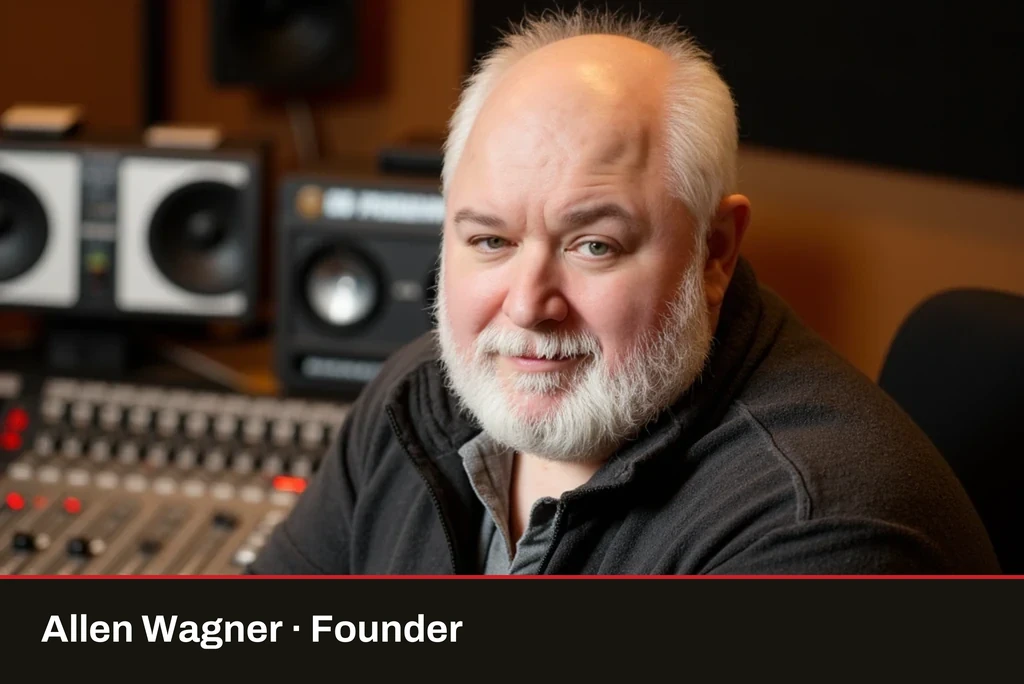
“I'd love to learn about you and your business.”
Ten minutes, and it's mostly me asking what you do, where you do it, and what you've already tried. No pitch deck, no discovery fee, no sales pressure.
Send the form on the rightbelow and I'll set up a call. If we're not a fit I'll tell you right up front and do my best to point you in the right direction.
Call me instead (360) 467-6957