
Get Chosen
Review Patrol
Get more reviews with our review management strategy. It's where nearly everybody starts, because your rating is what gets you chosen when somebody is looking at you and two other businesses.
Why this one first
It costs less than any other service we provide, and it moves the one thing that decides who gets the call.
In twenty-three years we’ve never seen anything quite as powerful as online reviews. Nothing can open, or close, a prospective client’s wallet faster.
Asked what they trust first when deciding what to buy, 54% of consumers named online reviews. Friends and family came second at 24%, and what the company says about itself third at 18% (National Leave a Review Day Survey, run by Prodege for Reputation, 2,000 US consumers).
When somebody is choosing between you and two other businesses, your star rating is the first thing they look at and often the only thing they read carefully. It works as a filter before it works as an argument: below about four stars most people stop considering you entirely, and nothing you’ve written anywhere gets read.
Sixty-eight percent of consumers say they will only use a business rated four or higher (Local Consumer Review Survey 2026, BrightLocal, 1,002 US adults). That’s why this sits at the front of the part of the loop that decides who gets the job and why we recommend it to businesses who hire us for nothing else.
It’s also the only thing on your entire online presence that a competitor can’t copy. They can copy your website in a weekend and outbid you on ads by Tuesday. They can’t copy two years of customers saying you turned up when you said you would, because that has to be earned one job at a time.
The count matters as much as the number
A 4.9 built on eleven reviews reads thinner than a 4.7 built on three hundred. One of those looks like a business that has been doing this for years. The other looks like it might be friends and family, and buyers are better at sensing that than most owners expect. That comes from reading a great deal of customer feedback, where people say plainly what made them suspicious. Volume also protects you: on eleven reviews, one bad week visibly moves your average. On three hundred, it doesn’t.
Worth knowing
A perfect five can work against you.
Northwestern’s Spiegel Research Center analyzed reviews across product categories and found that purchase likelihood peaks somewhere between 4.0 and 4.7 stars, then starts falling as the rating approaches a perfect 5.0. Their own summary puts it plainly: five stars reads as too good to be true.
Which is worth remembering the next time somebody offers to get you to a flawless score. The goal was never five. It’s a real rating, built on enough reviews that a stranger believes it.
Source: How Online Reviews Influence Sales, Medill Spiegel Research Center, Northwestern University.
And it decays if you stop
Recency is visible. A profile whose newest review is fourteen months old suggests either that the business has gone quiet or that nobody has been happy lately, and neither is what you want a stranger concluding. This is the main reason review work is a monthly service rather than a one-off project. It has to keep running, every month, on every job you finish. And stopping shows on your profile long before you’d notice it in your calendar.
What you get
What it actually involves.
Asking at the right moment
We ask every customer if they’re happy, at the moment they’re most likely to say yes. That moment is much closer to the end of the job than most businesses think, and asking a week later means asking a different, less enthusiastic person. We’ve tested it both ways.
Catching every one
We see every review the day it lands, so you’re not finding out about a problem a month after the customer told the whole internet about it. A complaint nobody answers is read by everybody who looks you up that week.
Replying to all of them
We reply to all of them, including the bad ones. A calm, specific answer to a complaint is read by every future customer who scrolls that far, and it does more for you than the complaint does against you. Most businesses either ignore these or argue with them, and both are worse than the complaint itself. Medical and dental practices are the one exception, and it’s below.
Keeping it running
We keep the whole thing running while you’re working, which is the actual product. Every owner knows they should be asking for reviews. Almost none of them do it in a busy month, and a busy month is exactly when the happy customers are.
If you’re a medical or dental practice, we set the rules with you first
HIPAA changes what a reply can say, and it changes it more than most owners expect. A response confirming somebody was a patient is a disclosure on its own, whatever else it says. Further down this page there are three settlements that turned on exactly that, and they’re worth your ten minutes.
What it means for buying this from us is simple: we don’t hand a practice a policy off a web page. We sit down with you and work out what your replies can and can’t say, who signs them off, and how the asking is done, before anything goes live. That conversation happens before you buy, not after.
If you’re a clinic, tell us when you call and we’ll start there.
Where the popular advice will get you suspended
You can decide who gets asked and when. You can’t decide what they write.
The complaint about review requests is a fair one. The generic please leave us a review text tends to produce great service, thanks, which holds your average up and says nothing about what you actually do.
The fix doing the rounds is to coach the review: ask the customer to mention the job, the outcome, how fast you were, the name of the tech who turned up. It’s presented as a harmless improvement, and it’s the single fastest way to get a profile restricted.
Google’s policy says it in one line
Merchants may not “request that specific content be included.” The permitted version is spelled out just as plainly in the same document: you may encourage a review of a genuine experience, but not while “attempting to influence the rating or the contents of the review.” Naming a staff member is called out specifically. It’s all on Google’s prohibited and restricted content page, in the merchant section, and it has nothing to do with whether the review is honest. A true review you scripted is still a scripted review.
The penalty isn’t a warning. Under the fake engagement rules a profile can be stopped from receiving new reviews for a period, or have the reviews it already has unpublished. Years of them, gone, on a service you bought to build exactly that.
So what’s actually left to work with
Volume, timing, and consistency, which are the parts that were doing the work anyway. Google’s own local ranking guidance credits the number of reviews and the ratings themselves. It doesn’t promise anything for particular words inside them. Ask everybody rather than the ones you think will be kind, ask close enough to the job that they still remember it, and keep asking in the months when you’re too busy to feel like it.
Detailed reviews are worth having and they do turn up. They turn up because somebody had an experience specific enough to describe, not because they were handed a topic. That’s the version that survives a policy review, and it’s the only version we’ll run for you.
When the client won’t be named
Some clients won’t put their name on it, and until recently that was the end of it.
In four kinds of practice the review is a cost to the person writing it. Bankruptcy, DUI, family law, immigration. The review is public, it’s permanent, it carries their name, and it sits there for anyone who looks them up years later. Somebody who has just been through any of those has a reason to say no that has nothing to do with how well you handled the matter.
So these profiles look thin next to a roofer’s, and the firms who own them usually read that as their own failure. It isn’t. It’s structural, and every firm on that caller’s list is up against the same thing.
What changed in November 2025
Google now lets somebody post under a display name of their choosing rather than the name on their account. For the practice areas above, that’s the first real answer to a problem that used to have none, and most firms still don’t know the option is there.
The catch decides whether it helps you
The setting is account-wide, not per review. It’s one display name across everything that person has ever contributed, and it applies backward as well as forward. You’re not asking somebody to tick a box on the way to writing about you. You’re asking them to change how they appear on every review they’ve ever left, including the ones they wanted their name on.
It also isn’t a throwaway account. It’s the same real profile it always was, showing a different name.
So some people will and some still won’t, and you can’t promise a client anonymity, because it’s a setting on their account rather than something you arrange.
What you can say when you ask
You can tell somebody the option exists. That’s a fact about their account, not a request about their review, and the difference between those two is what this whole page turns on.
What you still can’t do is influence what the review says or what rating it carries. That rule didn’t change in November and neither did the penalty for breaking it. So the method doesn’t change either: ask on every matter, ask the same way, and let people decide.
It counts, and it cuts both ways
An anonymous review is an ordinary review on your profile. It’s the same account posting under a different name, so it does the same work for your count and your rating as any other.
But the people who stayed quiet to avoid being identified weren’t all happy clients. Expect more reviews in both directions. That makes answering them well, and appealing the ones that genuinely break the rules, matter more in these practice areas than in a trade where nobody minded signing their name.
Nobody knows yet what a reader makes of one
This is the part worth being honest about. The option is new, and how much weight somebody gives a pseudonymous review while they’re choosing an attorney is genuinely unsettled. Anybody who tells you they know is guessing.
What isn’t unsettled is that a name has always carried more weight than no name, everywhere people read reviews about anything.
So this is the option for the client who would otherwise say nothing at all. It isn’t the default ask. Somebody willing to put their name to it is worth more to you named, and pushing your whole list toward anonymity would trade the persuasive half of your profile for the countable half.
And judge the result against the right comparison. Fourteen reviews is thin for a roofer and can be the strongest profile in the market for a bankruptcy attorney. The person choosing you is weighing you against the firms who do what you do, and all of them are working against the same reluctance.
Before you buy this from anybody
There are federal rules about this now, and the liability lands on you.
Since 2024 there has been a trade regulation rule covering consumer reviews and testimonials. It deals with reviews that are fake, reviews that are bought, reviews written by people connected to the business, company-controlled review sites, and how negative reviews are handled. It’s written in plain language and published as a question-and-answer document by the Federal Trade Commission.
You don’t need to read it. You do need to know it exists, because a cheap review service that gets this wrong creates a problem that belongs to your business and not to the agency you bought it from. The platforms have their own policies on top of the federal rule, and those can cost you your listing rather than money.
Ask anybody you’re considering how they keep you on the right side of both. Ask us the same question.
The half of this most owners get wrong
The riskiest sentence on your review profile is one you wrote yourself.
Everything above is about getting reviews. This is about what you write underneath them, which is the part that has actually cost business owners money.
You won’t hear much about it from other agencies, and there’s a reason worth knowing. The replies are usually the part the agency writes. Raising this means raising the question of what’s already sitting under your one-star reviews with somebody else’s wording on it.
Customers can now report your reply
Google added a report option to owner responses in August 2026. It sits under the response, separate from the review itself. The categories are off topic, profanity, bullying or harassment, discrimination or hate speech, and personal information, with a separate route for legal complaints. It was spotted in the wild and written up by Search Engine Roundtable on August 14, 2026, rather than announced.
Your replies were always subject to Google’s content policies. Google says plainly that it checks each reply before it posts and sends back anything it won’t approve. What changed is who does the flagging. It used to be Google’s own systems. Now it can be the person you replied to.
The reply that gets pulled is rarely the furious one
It’s the reasonable-sounding one. The long, patient paragraph laying out the whole timeline to show the customer was wrong is off topic by Google’s own definition. A back-and-forth that hardens into an argument is harassment by Google’s own definition. And the private detail you produce to prove your point is the personal information rule, word for word, with nothing left to interpret.
None of those feel like violations at nine at night after a bad job. They read like violations to a stranger three months later, and a stranger is who reads them. Your thank-you on a five-star review is nearly invisible. Your answer to the one-star sits where anybody deciding whether to call you’ll find it.
In healthcare, the same reply is a federal matter
Four public enforcement actions, all about the reply rather than the review. A Dallas dental practice paid $10,000 after answering a Yelp review with a patient’s name, her condition, her treatment plan, her insurance and what it cost; the write-up of that case is worth ten minutes of anyone’s time. A California dental practice paid $23,000 for replies that used patients’ full names when those patients had posted under handles. A New Jersey psychiatric provider paid $30,000 over its response to one negative review, and the regulator found it had done the same to three more patients.
The largest one wasn’t a settlement at all. A North Carolina dental practice drew a $50,000 civil money penalty after naming a patient three times in a reply to a Google review, then ignoring the regulator’s request for information and the subpoena that followed. The other three negotiated. That one didn’t, and it cost the most of any of them.
In every one of them the review wasn’t the problem. The customer decides what to make public about themselves. The business doesn’t get to add to it.
These move slowly, which is the part that catches people out. The California complaint reached the regulator in November 2017. The settlement landed in December 2022. Five years between writing the sentence and paying for it.
If you’re not in healthcare, no federal letter is coming, because those rules cover medical providers and not roofers. The report option is the enforcement that reaches everybody else, and it’s a great deal faster than five years.
And if you’re in healthcare, this isn’t the only thing that changes for you. What else is different for a practice is here, along with the pages for chiropractic, naturopathic medicine and dental.
What a safe reply looks like
Short, specific, and moved off the platform. On a good review, thank them and name the job: glad the water heater swap went smoothly, appreciate you taking the time. On a bad one, say it missed the standard you aim for and ask them to call the number on the profile so you can find out what happened. Don’t use their name. Don’t say what they bought. Don’t say what they owe. Never call anybody a liar in public.
Answer all of them anyway. A profile where somebody replies is a profile that looks managed, and that has counted in your favor for a long time. The report option doesn’t change that. It raises the bar on what the answer can say.
Reading back through your last twenty replies is an hour’s work and it’s worth doing before anybody else does it for you. Start with everything under three stars. Anything that names the reviewer, adds a detail they didn’t share first, or argues the facts in public should be edited or taken down. We do that pass for every client before we touch anything else, because a review service that fills a profile with replies you’d lose isn’t worth buying. Ask whoever you’re considering how they’d answer a one-star review, and ask to see one they’ve written.
Two things you can add
Not every bad review is a customer.
Some are competitors. Some are former employees with a grudge. Some are from people who have never done business with you at all, and every so often it’s plain mistaken identity, meant for a business with a similar name two towns over.
Those break the platform’s own rules, and a review that breaks the rules can be appealed.
Review Extraction
Negative review removal: we build the case and file the appeal. What matters here is what we can’t do: in the end it’s in Google’s hands, not ours. Nobody can promise you a review comes down, and anybody who does is selling something they don’t control.
What we bring is experience working inside their system. Knowing which rule a review actually breaks, how to document it so the appeal holds together, and what separates one that gets read from one that gets closed. A properly built appeal on a review that genuinely breaks the rules has a real chance. A shrug has none.
It works the way hiring a lawyer works. You’re paying for somebody who knows the system, builds the strongest case the facts allow, and argues it properly. A good lawyer doesn’t win every case, and that was never what made them worth hiring.
The difference here is that a lawyer bills you either way. We don’t.
It’s a one-time job, quoted case by case, because no two are alike. And you don’t pay unless the review comes down.
That’s the only promise of that kind on this site, so it’s worth saying why it isn’t the sort we spend a whole page warning you about. A guaranteed ranking is met by a result you can’t check and can’t use. This one you can check in about four seconds: the review is there, or it isn’t. And the risk sits with us rather than with you.
Review Defense, the add-on
The appeal that works is the one filed right away, not the one filed whenever somebody next thinks to look. Review Defense watches your profile and starts the appeal the moment a suspicious review appears, day or night, without waiting for you to notice it or for us to run a report.
It’s an add-on to review management rather than a service on its own, because there’s no point defending a profile nobody is building.
What it doesn’t do is challenge a real customer who had a bad experience. That one is yours to answer, and answering it well is worth more to you than making it disappear would be.
What it costs
Quoted once we’ve looked.
Review Patrol
No long-term contract. Month to month, cancel anytime.
When this is the wrong thing to buy
If almost nobody is finding you, this won’t fix your month. A perfect rating shown to eleven people a year is still eleven people a year, and you’d be better served starting with the work that puts you in front of more of them. We’ll say so on the call.
And if the reviews you have are bad because the work was bad, this is the wrong purchase and we’re the wrong people. Nothing here repairs a business. It makes a working one more obvious.
What changes, and how you’ll see it.
Your star rating and your review count both climb, and here is the part that matters more than any of the rest of this page: you can watch that happen yourself, on your own phone, without anybody sending you a report about it. There’s no other service we sell where the proof is that directly in your hands.
That’s not a coincidence. We only report one number: how many calls you got and how many contact requests came in from your website, because everything else in this industry can be made to look like progress without producing any results. Review work happens to be the one service where you can also see the work itself in ten seconds, on the same screen your customers are looking at.
Frequently Asked Questions
The things worth asking before you buy.
Can I just buy reviews?
No, and it's the one shortcut here that can end your listing. Buying reviews breaks Google's terms and it breaks the FTC's rule on consumer reviews, which treats fake positive feedback as deceptive advertising. The penalties are per review, not per business.
The part most owners don't know: you're liable even if an agency bought them on your behalf. Hiring somebody who does it quietly doesn't move the risk off you, it just means you find out later.
Read more on this topic: why buying reviews is a federal problem
Can I offer a discount to somebody who leaves a review?
No. Google calls that fake engagement and it can suspend the profile. A discount, a gift card, an entry into a prize drawing, all of it counts, and it doesn't matter that the review itself is honest. The incentive is the violation.
Can you get a bad review taken down?
Only if it breaks the platform's rules, and then it's an appeal rather than a removal. Neither you nor we can delete a review. Google can, and only for things like spam, a competitor, an ex-employee, or content that was never about a real visit.
That's what Review Extraction is: a one-time appeal on a review that breaks the rules, and you don't pay unless it comes down.
Read more on this topic: when a bad review can be removed
How much damage does one bad review actually do?
It depends almost entirely on how many you already have. On a young profile with a handful of reviews, one bad one moves the average hard and shows up immediately. On an established profile it takes a run of good ones to pull the visible rating back, and on a large profile it barely registers.
Which is the real argument for volume. A steady flow of reviews isn't about the number, it's about what happens on the day you get an unfair one.
Why did some of my reviews disappear?
Google removes reviews at a scale most owners don't expect, and genuine ones get caught. The usual triggers are a sudden burst of reviews in a short window, reviews from brand-new or dormant accounts, several reviews using near-identical wording, and anything that looks incentivized.
It's also why a slow, steady pace beats a push. A month of silence followed by twenty reviews in a day looks exactly like the thing Google is hunting.
Somebody wrote something that isn't true. What can I do?
There's a real line between an opinion you dislike and a false statement of fact. "The work was sloppy" is an opinion and it's protected. "They never showed up and kept my deposit" is a factual claim, and if it's untrue and it costs you money, that's different ground.
Report it first, because it may break the rules on its own. Replying calmly matters more than most owners think: the reply is for the next person reading, not for the reviewer.
Does replying to reviews actually matter?
Yes, and mostly for an audience that never leaves a review at all. The person deciding between you and two others reads how you answered the worst one you've got. A calm, specific reply does more for them than the five-star review above it.
Do I have to do anything?
Almost nothing, and it all happens at the start. We need access to the profile and a sense of how your work actually finishes, because when the ask lands matters more than what it says. After that it runs.
Read more on this topic: What the first month asks of you
Why is this the one you tell everybody to start with?
Because it decides the outcome of everything else you pay for. Getting found is worth nothing if the person who finds you looks at three businesses and picks one of the other two. This is the service that changes which one they pick.
Read more on this topic: Why being chosen is a separate job from being found
Can I ask a client to leave a review anonymously?
You can tell them the option exists, and that's where it stops. Since November 2025 Google has let somebody show a display name of their choosing instead of the name on their account. For bankruptcy, DUI, family law and immigration, that's the first real answer this problem has ever had.
Two things before you lean on it. The setting is account-wide and it applies backward, so you're asking somebody to change how they appear on every review they've ever left rather than to tick a box for yours. And you still can't influence what the review says or how it rates you. That's a separate rule and it didn't change.
Do anonymous reviews still count?
Yes. It's the same real account it always was, showing a different name, so it does the same work for your review count and your rating as any other one does.
What's less settled is what a reader makes of one, and that matters just as much. The option is new, and a name has always carried more weight than no name. So it's worth offering to the client who would otherwise say nothing at all, rather than making it your standard ask.
Book a call
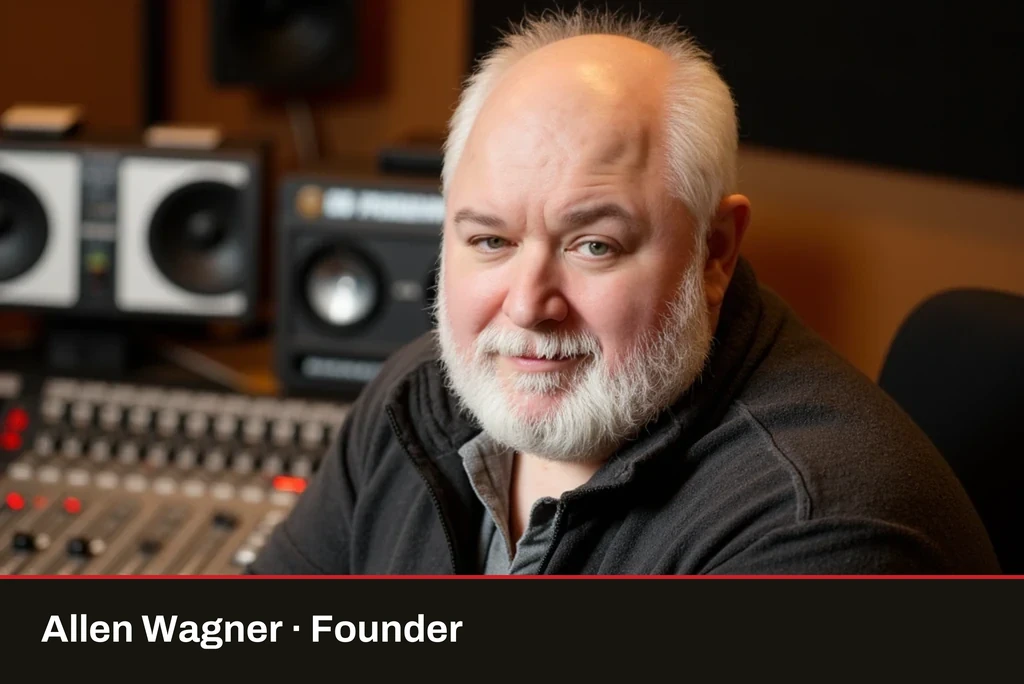
“I'd love to learn about you and your business.”
Ten minutes, and it's mostly me asking what you do, where you do it, and what you've already tried. No pitch deck, no discovery fee, no sales pressure.
Send the form on the rightbelow and I'll set up a call. If we're not a fit I'll tell you right up front and do my best to point you in the right direction.
Call me instead (360) 467-6957