
Who we work with
Who We Serve
Three markets that look nothing alike and share almost the same problem. Twenty kinds of business, each with its own page.
What these three have in common
A roofing company, a law firm and a dental practice are the same problem wearing different clothes.
We work with three kinds of business that look nothing alike. A roofer, a two-attorney firm and a dental practice don’t share a customer, a price, a sales cycle or a regulator. What they share is the thing that decides whether any of them has a good year.
Nobody goes looking for any of you until they need you. There’s no browsing, no preference built up over months, no decision made at leisure. Something breaks or something happens, and a person who wasn’t thinking about you an hour ago starts looking right now.
They decide fast, on very little. A few names, a star rating, whatever your website looks like in the four seconds it gets, and whether a human picks up. That’s the whole evidence base, and it’s the same evidence base whether the work is worth eight hundred dollars or eighty thousand.
And you never find out about the ones you lost. Nobody calls to say they went with somebody else. A job you were never considered for doesn’t show up anywhere as a loss, which is why owners in all three markets almost always think this problem is smaller than it is.
The difference in the third one is what happens afterwards. A roof is finished and that customer is gone for fifteen years. A practice has a list of people who already chose it once and were meant to be back in six months, and mostly aren’t. Nobody goes looking for a dentist either, and that’s exactly why the practice has to be the one who gets in touch.
Where they stop being the same
Then the arithmetic diverges, and it changes what’s worth doing.
What one job is worth
A roof pays for a slice of a month’s marketing. A single signed matter can be worth more than a year of it. A patient isn’t worth a job at all, they’re worth a plan or twenty years of six-month visits. That one number changes what a missed call costs you and how much of this is worth doing at all.
How long the decision takes
A burst pipe and a Friday night arrest are settled in minutes, by whoever answers. A kitchen remodel and an estate plan take weeks and are settled on trust. Somebody looking for a naturopath has been deciding for two years and has already paid somebody else. Most businesses have one of these and get sold marketing built for another.
Who else gets a say
A roofer answers to licensing and to the federal rules on reviews. A firm answers to both of those and to a state bar. A practice answers to a board, and to something most agencies have never read: replying to a patient review can itself be a disclosure. Those rules are yours rather than ours, and we’d rather ask than assume.
Which is why the answer splits three ways
The advice that fits a restoration company arriving on the worst day of somebody’s year isn’t the advice that fits an estate planning attorney whose client has been meaning to call for four years, and neither one fits a practice whose growth is already sitting in its own charts. All three are real businesses with real problems. They’re just not the same problem.
So they don’t get the same answer from us. Where the arithmetic above diverges, what we’d tell you diverges with it, and anybody offering all three of you the same plan hasn’t looked at those three columns.
The three markets
Start with the one you’re in.
Home services
Trades that get hired one job at a time, usually by somebody with a problem that started today. The work is won on being reachable and being trusted quickly, and lost to whoever answered first.
Marketing for home servicesLaw firms
Solo attorneys and small firms, where intake is the whole game and one signed matter can carry a quarter. Half the work is urgent and decided in hours; the other half takes weeks and is won on trust.
Marketing for law firmsHealthcare practices
Years of training in how to treat people and not one class on how to fill a schedule. The rules about what you may say are tighter than anybody else’s here, and keeping patients matters more than finding them.
Marketing for healthcare practicesThe specifics
Twenty kinds of business, and each one has its own page.
The differences inside a market are as real as the difference between the markets. Pest control has no referral engine, because nobody asks a neighbor about roaches. Bankruptcy has none either, for a reason that has nothing to do with pests. A chiropractor is still quietly answering whether the whole field works. So the page for your trade is about your trade, not about home services or law in general.
Home services
Law firms
Healthcare practices
Straight answer
If you’re not on that list.
Other local trades usually still fit
Garage doors, flooring, tree work, appliance repair, locksmiths. If you get hired one customer at a time inside a drive time, everything on the home services page applies whether or not your trade has a page of its own yet.
Other areas of law usually still fit
Criminal defense beyond DUI, employment, real estate, probate. Same test: if somebody looks for you at the moment they need you and retains whoever they reach, the law firms page is written about you.
Other practices usually still fit
Physical therapy, optometry, veterinary, podiatry. If people find you locally, choose you on reviews, and are meant to come back on a schedule, the healthcare page is about you, and so are the rules on it.
Some businesses genuinely don’t
National ecommerce, software sold to other companies, anything bought after months of comparison by a committee. That’s real work and somebody does it well. It isn’t us, and we’ll say so on the call rather than after the invoice.
Not sure which page to read first.
Read the market page for the one you’re in, then the page for your trade or practice. The market page covers what’s true across all of it. The specific page covers the part that’s only true for you, which is usually where the money is going.
If you’d rather skip the reading, that works too. Most owners can’t say which of the three parts they’re missing, and that’s the normal starting position rather than a failure of attention. It’s also the first thing worth working out.
It usually takes one ten-minute conversation, and it’s free.
Book a call
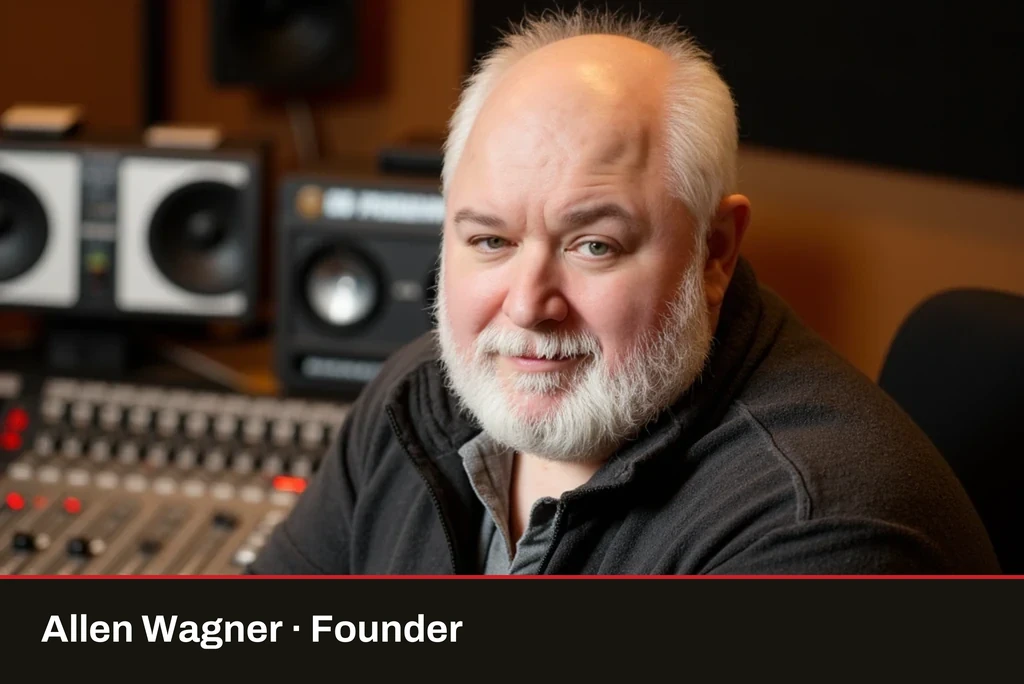
“I'd love to learn about you and your business.”
Ten minutes, and it's mostly me asking what you do, where you do it, and what you've already tried. No pitch deck, no discovery fee, no sales pressure.
Send the form on the rightbelow and I'll set up a call. If we're not a fit I'll tell you right up front and do my best to point you in the right direction.
Call me instead (360) 467-6957