
Step one of three
Get Found
When somebody needs what you do today, you're who they find. Not the business three towns over with a bigger ad budget.
What this actually means
Being found isn’t one thing. It’s three, and they happen in different places.
Whether it’s a water heater that just failed or the need for a divorce lawyer, that person doesn’t run one search and pick the first name.
They glance at the map, read three or four reviews without really reading them, maybe ask their phone a question in plain English, and call somebody within about four minutes. Every one of those is a different surface, and you can be present on one and invisible on the others without ever knowing it.
That’s the first thing worth understanding about getting found: it’s not a single position you either hold or don’t.
It’s a set of places, and most businesses occupy one of them by accident and none of the rest on purpose. This is the first of the three parts we build, and it’s the one people think is the whole job.
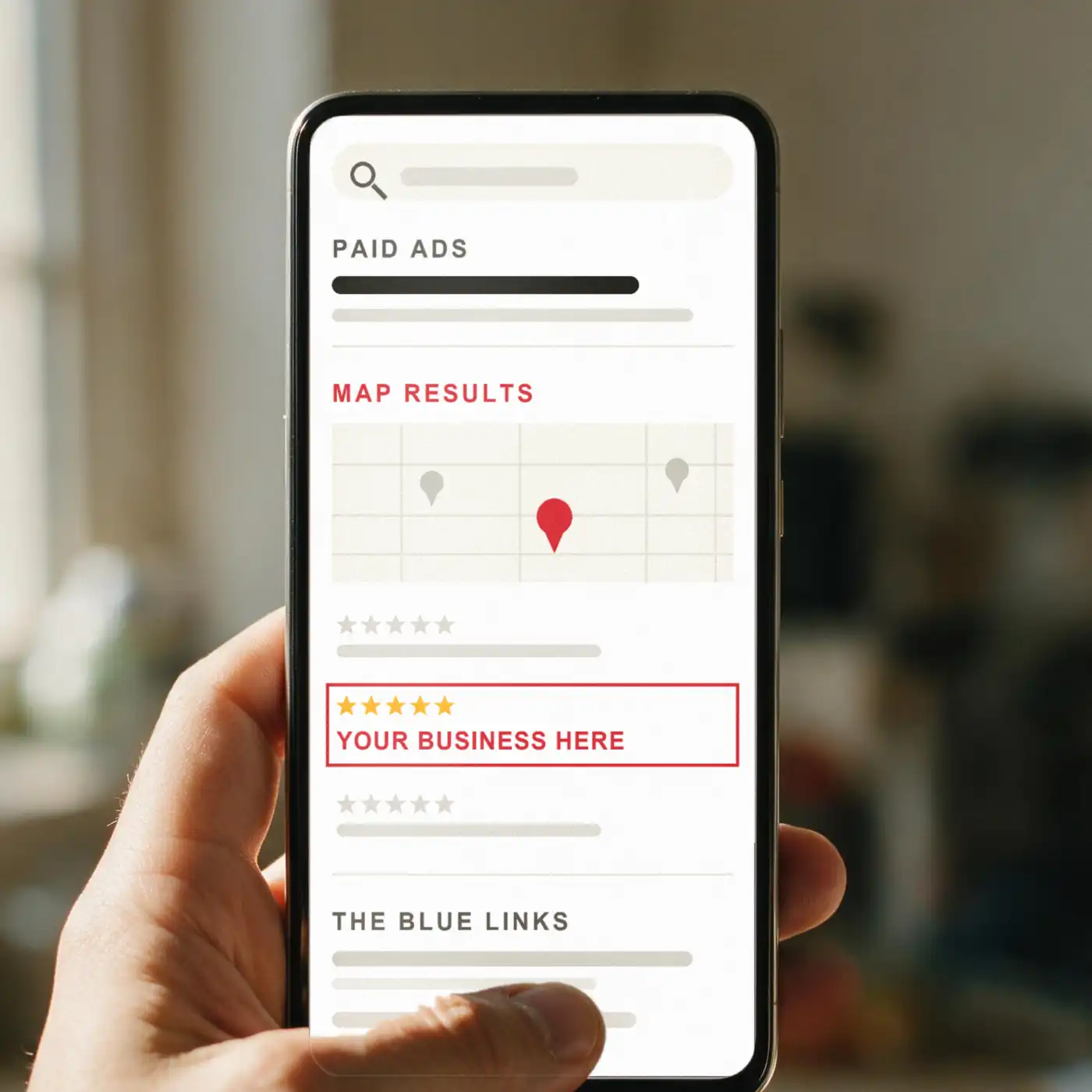
The map is its own thing, and it’s usually the biggest one
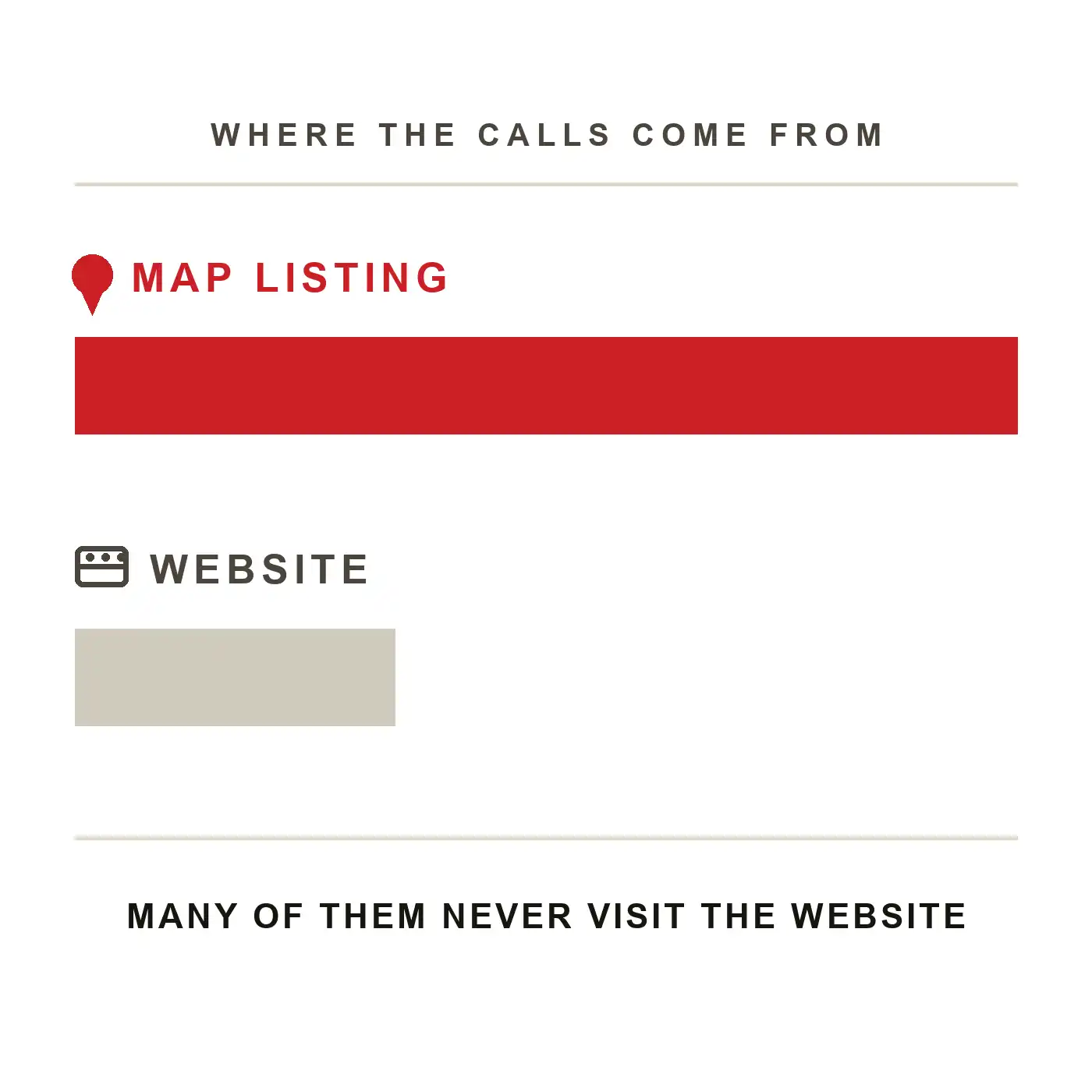
For most local businesses, more calls come out of the map listing than out of the website. That’s years of watching client analytics rather than a published figure, and the part that surprises owners is how many of those callers never open the website at all.
Somebody who opens the map has already decided to hire a local business.
They’re working out which one, not whether to bother, which makes them a qualified buyer before they have ever seen your name. It’s a separate listing with its own rules, its own categories, its own photographs and its own reviews, and it can rank well while your website ranks nowhere, or the reverse.
Businesses routinely spend a year on a website while the listing that generates their actual phone calls sits half-filled in with a category somebody guessed at in 2019.
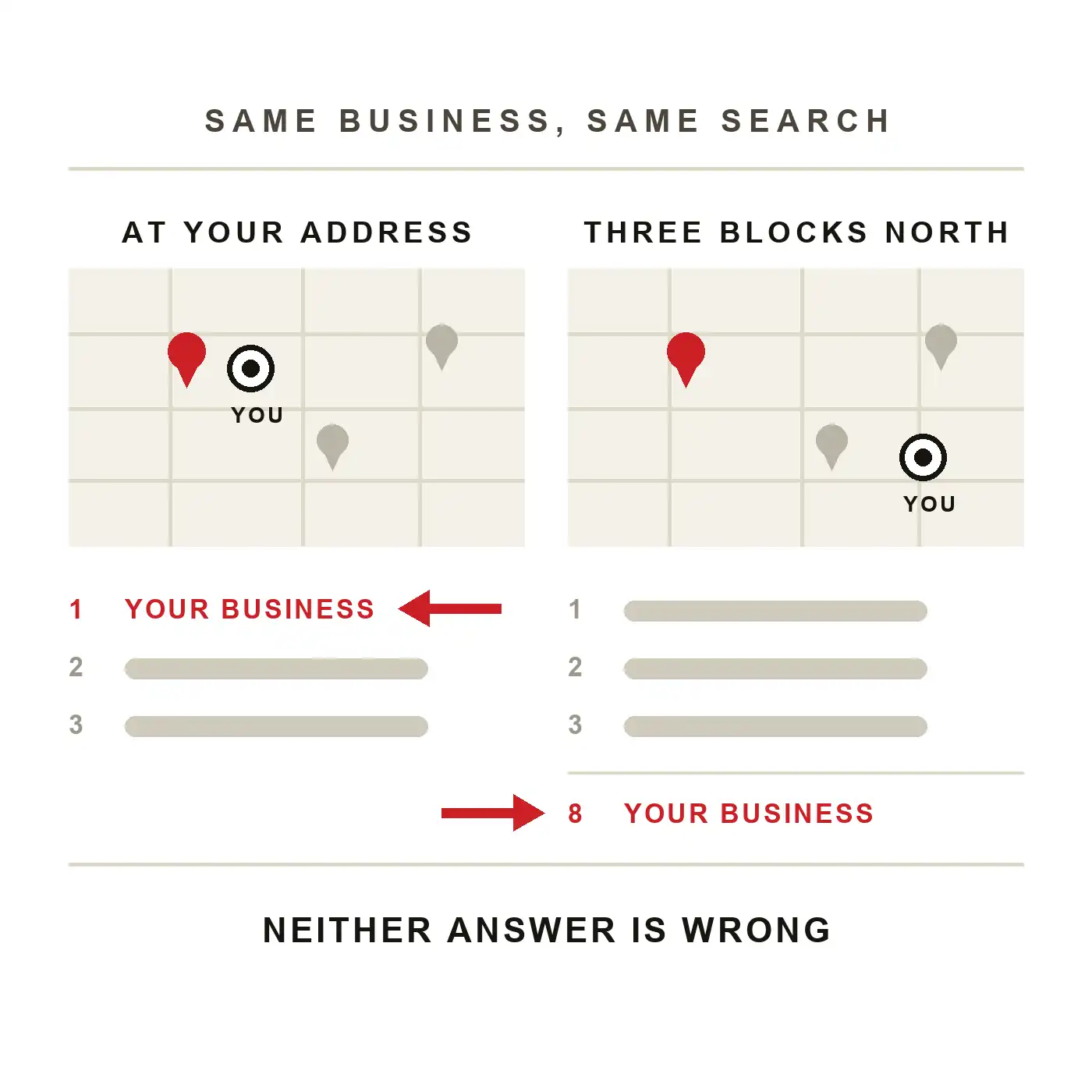
Where somebody is standing changes what they see
This is the part almost nobody is told, and it’s why two people can compare notes about your business and both be right. Map results are worked out from where the phone physically is. You can be first in your own parking lot and not appear at all three blocks north, and neither answer is wrong. They’re answers to two different questions.
Which makes the test every owner reaches for, searching your own business on your own phone, the least accurate way to find out where you stand. Two things are working against it at once, and both of them flatter you.
You’re standing at the one spot on earth where you rank best, because you’re at your own address. And it’s your device: signed into your own account, full of searches for your own business, and it’s visited your website more than anybody else’s ever will. What comes back is shaped by both. It’s closer to a mirror than a measurement.
The same goes for a competitor you’re worried about. Search them from your desk and you’re not seeing what your customers see either. If you want to know how you’re really doing, the question is what somebody with no history of you sees, standing somewhere across town.
It also empties out the sentence “we got you to number one”. Number one for somebody standing where? A ranking with no place attached to it doesn’t mean anything, and that’s worth asking about before you pay anybody for one.
Which is why what we go for is the top three positions in the maps in Google, inside the few miles around your address where a local business can realistically show. Not the number one spot, because that moves with every person searching. You don’t need to be first. You need to be one of the three, for the things people actually type when they need what you do.
That radius isn’t a ceiling. Widening it is most of the ongoing work, and once an area is genuinely saturated the next move is another area rather than a bigger radius.
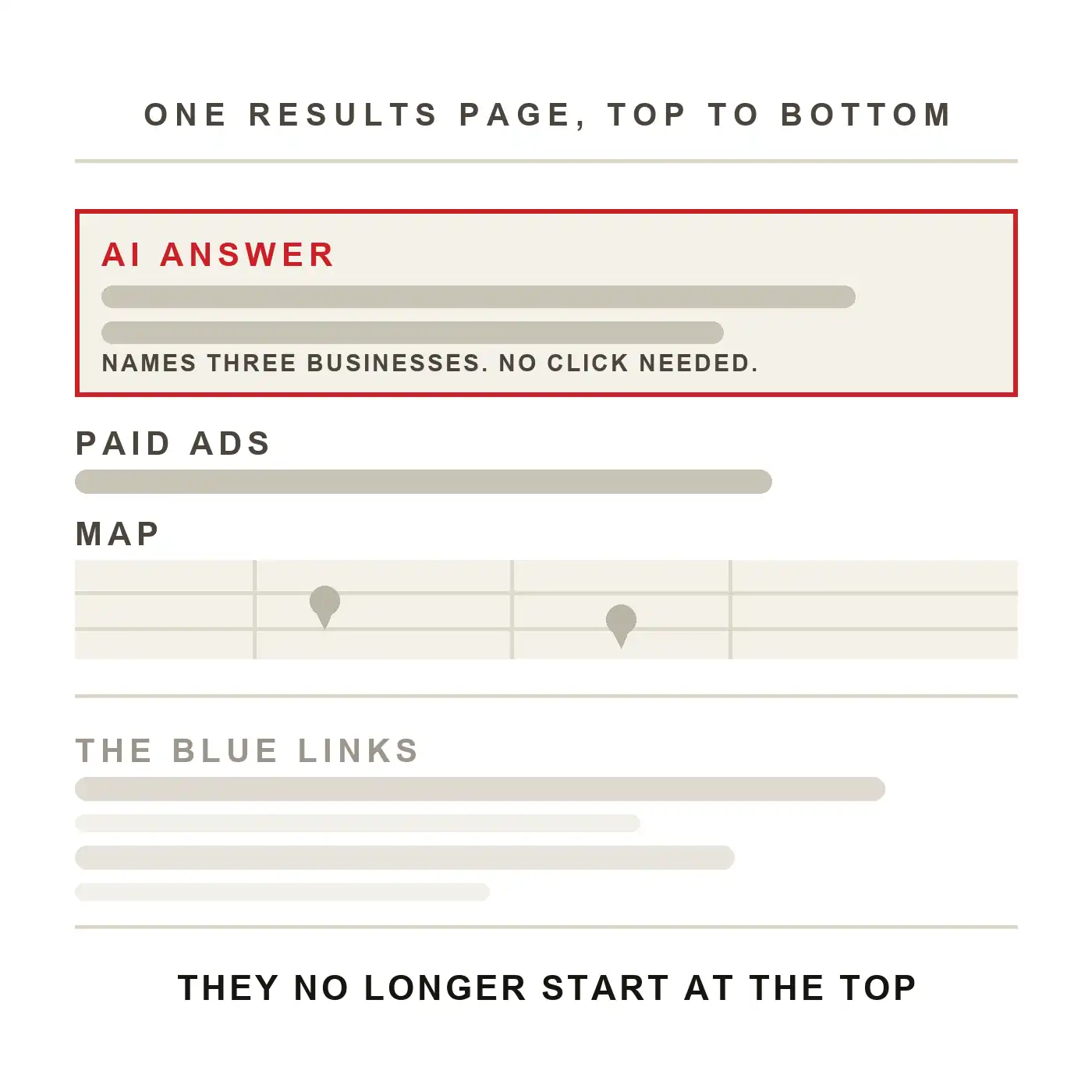
Search isn’t one list any more
The results page a customer sees is a stack of different things: the map, the paid slots, the ordinary blue links, and now a written answer at the top that names a few businesses and saves the reader from clicking anything. Being first on the blue links is worth much less than it was when the blue links started at the top of the page. They no longer do.
A growing number never search
They ask. They type a whole sentence into a chat window, who should I call about a leaking roof in a town like mine, and they get back a short list of names and a reason for each. That list is assembled from what the machine can read and verify about you. If your business is a phone number and a photograph, there’s nothing to assemble, and you’re not on it.
What we do about it
Three services, three different jobs.
Search & Rescue
Local search and AI search. The map listing gets built out properly rather than filled in. The website gets enough real pages that there’s something to find and something for a machine to quote. Citations get built on sources that actually matter instead of a bulk directory blast. It starts producing calls somewhere in the first ninety days, and it doesn’t stop the day you stop paying attention to it.
What it doesHired Gun
Paid ads. They put you at the top of the page this week, for money, and they stop the day the money stops. That’s not a criticism, it’s what they’re for. When your schedule has a hole in it next month, ads are the only thing here that can fill it in time.
What it doesAir Drop
Direct outreach: text, voicemail and mail sent out to your market rather than waiting for it to come looking. It reaches people who weren’t searching today, which makes it the most expensive way here to find a job and the only one that works in a market too small to search its way to a full schedule.
What it doesMost businesses need the first two, and they need them in that order of importance and the reverse order of urgency. The ads pay the bills while the search work builds something you own. The third is for when those two are already doing their jobs and the month still isn’t full.
When this is the wrong place to start
If your phone already rings and nobody answers it, more calls make your problem worse, not better. If your reviews are thin or bad, everything we send you’ll look at them and call somebody else, and you’ll have paid to send people to a decision you lose.
In both cases the honest answer is that the second part of this comes first, and we’ll tell you so rather than take the money.
How you’ll know it’s working.
You won’t get a report about how many people saw you, or where you rank. You’ll get two numbers.
- How many calls you got.
- How many contact requests you got from your website.
Spam and sales calls don’t count toward either one.
That’s deliberate. Getting found is the easiest result to fake in this business, because every one of its natural measurements can move without a single extra person ever calling you.
- Rankings can rise on terms nobody searches.
- Visitor numbers can double and produce nothing.
If we can’t make your phone ring more than it does now, none of the rest of it happened, whatever the graph says.
Where this goes next.
Getting found is the part everybody sells and the part everybody assumes is the whole job.
It’s not.
It’s the first of three, and on its own it produces a phone that rings with people who then go and hire somebody else, because being found and being chosen are two different problems with two different fixes.
If your schedule has a hole in it and you need calls sooner than search can deliver them, say so on the call and we’ll start with ads and build the rest underneath.
If your reviews are the actual problem, we’ll tell you that instead, and you’ll spend less money than you were expecting to.
Book a call

“I'd love to learn about you and your business.”
Ten minutes, and it's mostly me asking what you do, where you do it, and what you've already tried. No pitch deck, no discovery fee, no sales pressure.
Send the form on the rightbelow and I'll set up a call. If we're not a fit I'll tell you right up front and do my best to point you in the right direction.
Call me instead (360) 467-6957