
Get Booked
Target Lock
The ones who looked at your website and didn't call
are the least expensive people you'll ever reach again.
The least expensive people to reach
Somebody looked at your business and didn’t call. They’re still the best chance you have.
You’ve already experienced this yourself.
You visit the website of a famous jewelry store, looking for a gift for an upcoming special occasion. Suddenly, no matter where you go online all you see are ads for that jewelry store, maybe even ads for the exact thing you were looking at.
You were just retargeted.
That’s exactly what Target Lock does. It shows your name again to the people who have already visited your website. They see it on other sites and apps they were going to be using anyway, over the next few days, while they still half-remember you. Nobody else in town sees it. Only the people who already came looking.
This used to be something only the big chains could do. It took budgets and staff a local business was never going to have, which is why the companies following you around the internet were always national ones.
That stopped being true a while ago. The same thing that jewelry store did to you is now within reach of a contractor with one truck or a firm with two attorneys.
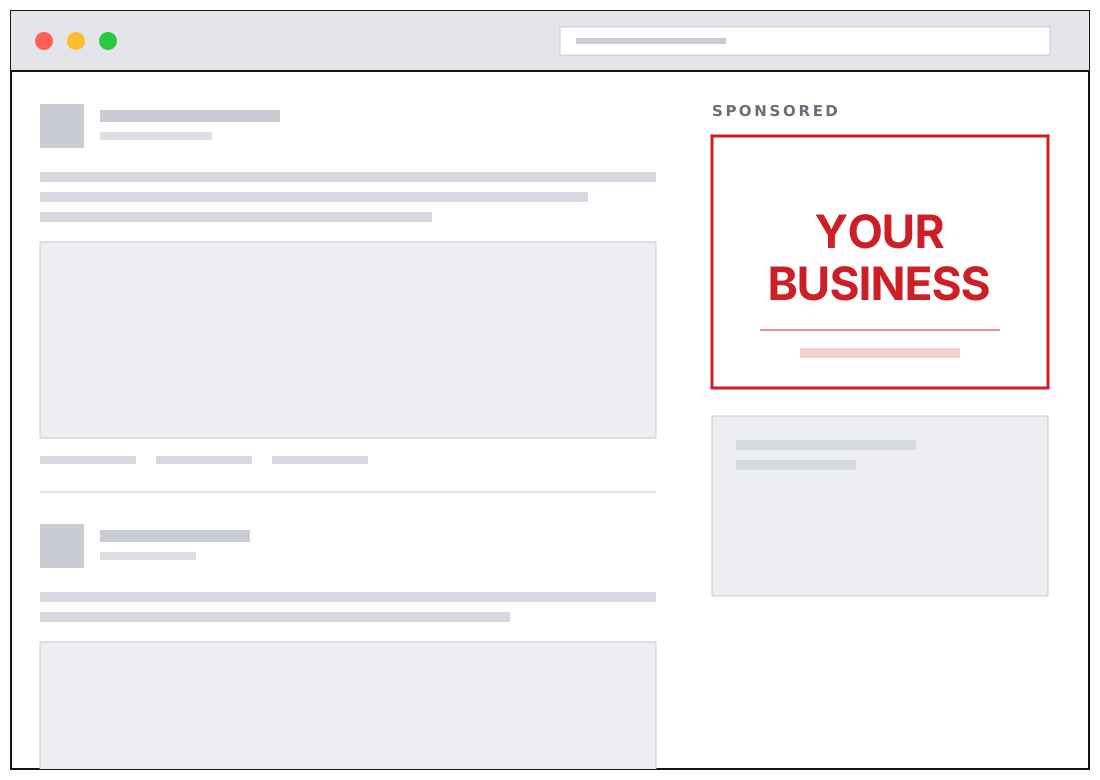
Almost nobody hires on the first visit, with one exception that matters. Somebody with water coming through the ceiling hires whoever answers, today. Everybody else looks, gets interrupted, and means to come back. Then two weeks pass and they genuinely can’t remember which of the three names they liked. They don’t choose your competitor over you, they just forget you, which is a different problem and a much less expensive one to solve.
You’ve already paid to get that person’s attention once, through search, ads, or the map. Reaching them again costs a fraction of what it cost to reach them the first time, and that’s the entire economic case for this. It sits inside the follow-up half of the loop alongside text and email, and it’s the part that works on people who never spoke to you at all.
Why the second showing does the work
The first time they saw you, you were one of three names and none of them meant anything. The next time, you’re the one they recognize, and recognition is doing almost all of the persuading here, not the ad itself. This is why retargeting works at spending levels that would achieve nothing at all pointed at strangers.
It has a shelf life
A roof that’s leaking today is a decision this week, and so is an accident that happened this morning. Somebody who looked at you in March isn’t going to be moved in July by seeing your name again, because their problem is either solved or forgotten. Retargeting is worth doing for a matter of weeks after somebody looks at you, and money spent chasing people beyond that window is money wasted. Anyone who wants to run it indefinitely at a flat budget isn’t paying attention.
What you get
Your name back in front of the people who already looked.
The people who visited your site and didn’t get in touch see you again over the following days, on the sites and apps they were going to be using anyway. Not everybody in your town, just the ones who already showed up once.
We keep the audience honest: the people who genuinely looked, inside the window where it still matters, excluding the ones who already called you. There’s no point paying to advertise to a customer you’ve already booked, and it’s the fastest way to look like you’re following people around.

How the audience gets built
A small piece of code sits on your website and does one thing: it notes that a browser was here. No name, no phone number, nothing that identifies a person to us. What builds up is a list of browsers that visited and didn’t get in touch, which is the entire targeting.
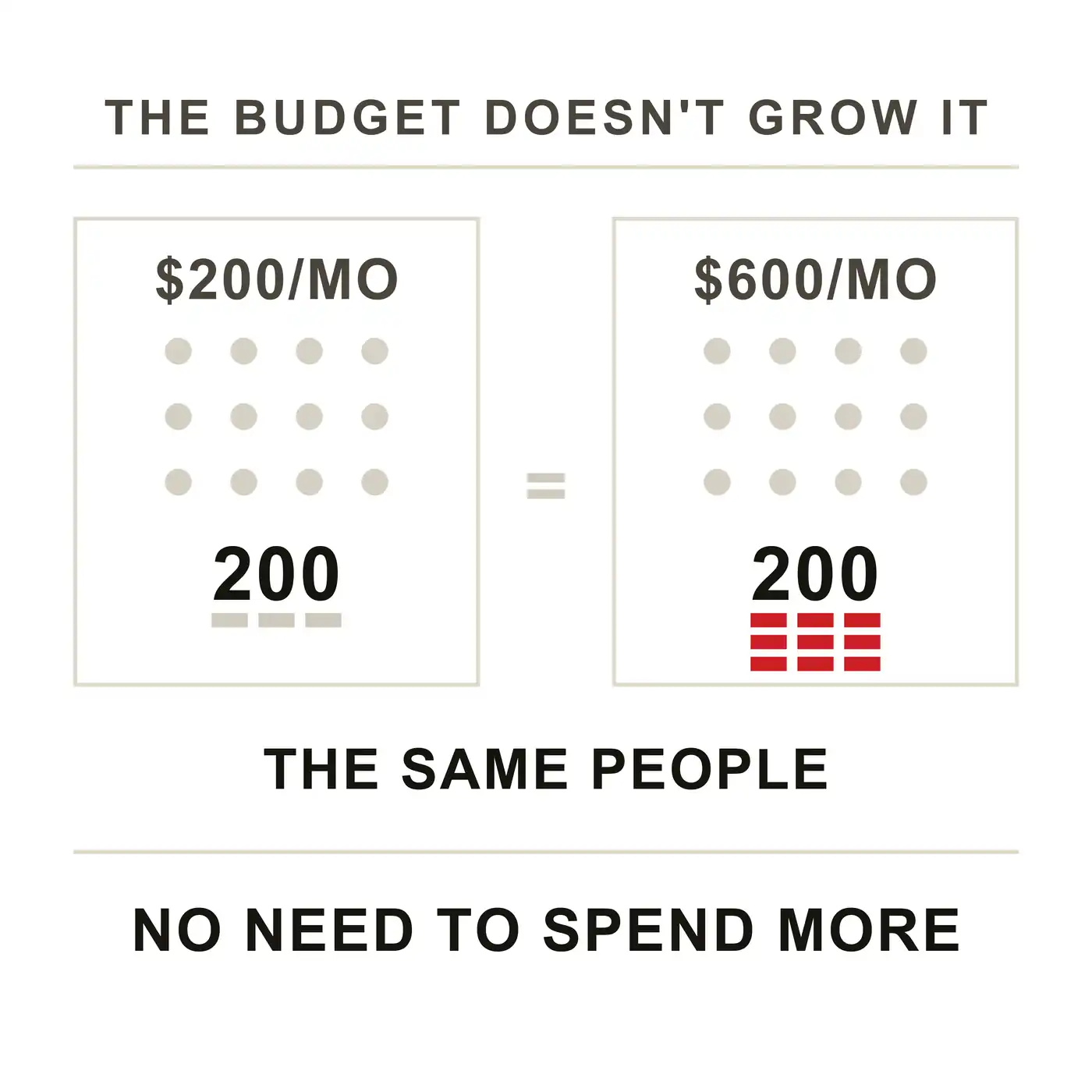
That list is smaller than owners expect and it doesn’t grow with the budget. If two hundred people looked at your site last month, those two hundred are the audience. Spending more doesn’t find four hundred; it shows the same two hundred more ads, which is the mechanism behind every complaint anybody has ever made about this channel.
People drop out of it after a set number of weeks. Somebody who looked once and never came back has answered the question, and continuing to pay to reach them is buying the least promising part of a small list.
Who gets left out, and why it matters
Anybody who already hired you comes out of the audience. This has to be done deliberately, because it doesn’t happen on its own. Customers visit your site more than anybody else does: before hiring you, while deciding, to find your number again, to check an address. Left alone, the people who already paid you see the most ads.
That costs twice. Once in money, because every impression served to a customer is one not served to somebody who hasn’t called yet. And once in standing, because being advertised at for the thing you bought last week tells somebody exactly how closely the business is paying attention. Nobody complains about it. They just notice.
The list has to be kept current, which is the part that quietly stops happening in accounts nobody is watching. It’s refreshed on the same cycle your customers arrive, not built once at setup and left to go stale.

How often is too often
The difference between useful and irritating is frequency, and almost nobody caps it. It’s the first thing we check in an account somebody else built, and leaving it uncapped is a rookie mistake. The trade has a rule of thumb about this, the Rule of 7, which says somebody needs to see you seven times before they buy. Nobody can say where the number came from, and it’s the wrong question anyway. The right one is how many times in how long. Seen three or four times over a week, you’re the business they remember when they sit down to make the call. Seen twenty times, you’re the business that follows people around the internet, and they’ll say so to somebody in exactly those words. That’s a reputation you paid for.
So there’s a ceiling on how often any one person sees you, and a hard stop at the end of the window. It costs you less and it works better, which is unusual, most of the ways to make advertising less annoying also make it less effective, and this is the exception.

Two costs, and they’re separate
There’s our fee, and there’s what you spend on the ads themselves. Those are different things and they go to different places, the ad spend goes to the platform, not to us. Anybody who quotes you one blended number is hiding which half is which.
We usually suggest starting the ad spend around two hundred dollars a month. Not because that’s a magic figure, but because it’s enough to see whether it does anything for your business without being enough to hurt if it doesn’t. You raise it once it has proved itself, and you should refuse to raise it before then.

What it costs
Our fee, plus what you spend on ads.
Target Lock
Two bills, ours and the platform’s. Raise the spend only once it has earned it.
When this isn’t worth buying
If very few people are visiting you in the first place, there’s nobody to retarget and this does nothing at all. It needs an audience to work on, which means it belongs after the work that brings people to you, never before it. Buying this first is the most common way to waste money on it.
It also won’t rescue a business people are choosing not to hire. If they’re looking at your reviews and going elsewhere, showing them your name three more times just confirms the decision faster.
The leak between looking and calling.
More of the people you already paid to reach come back and call you. Nothing about how many people find you changes at all, this is entirely about the leak between looking and calling, which in most local businesses is the largest single loss in the whole operation and the one nobody measures.
You’ll see it the same way you see everything else here: in how many calls you got and how many contact requests came in from your website. Not in how many times an ad got shown, which is a number we could make enormous this afternoon without earning you a dollar.
Frequently Asked Questions
The things worth asking before you buy.
Isn't this a bit creepy?
It's the fairest objection to this service and it deserves a straight answer. The ads only reach people who came to your website. Nobody's identity is known to you or to us. What's stored is that a browser visited, and that's what decides who sees the ad.
Where it goes wrong is frequency. An ad following somebody for weeks after they've already hired you is what makes people say the word. Capping how often it shows and excluding people who already bought is most of the difference between a reminder and a nuisance.
Read more on this topic: whether retargeting ads are creepy
How many times will people see my ad?
Capped, deliberately, and lower than most people run it. The temptation is to squeeze every impression out of a small audience. That's how a useful reminder turns into the thing that annoys somebody about your business.
What does "our fee plus ad spend" mean?
Two separate bills. One is our fee for building and running the campaign. The ad spend goes to the platform and you set it. Our half covers setting up the audience, excluding the people who shouldn't be in it, writing and building the ads, capping how often they show, and watching it week to week.
We suggest a modest cap on the spend, because a retargeting audience is small by definition and money past a certain point just buys the same people seeing the same ad again.
Does it work if hardly anyone visits my site?
No, and this is the honest limit of it. Retargeting multiplies traffic you already have. If almost nobody's visiting, there's nobody to retarget, and the answer is to fix the getting-found problem first.
Read more on this topic: Getting found, which has to come first
Will people who already hired me keep seeing ads?
They shouldn't, and excluding them is part of setting it up properly. Showing ads to somebody who already paid you wastes your money and makes you look like you weren't paying attention.
How is this different from Recall?
One reaches strangers who visited, the other reaches people you already know. Retargeting shows ads to anonymous visitors. Recall goes back to customers on your own list by name. Different audiences, different tools, and they're often bought together for that reason.
Read more on this topic: Going back to people you already earned
How soon after somebody visits do the ads start?
Quickly, because that's when it works. Somebody who looked at your site yesterday is in a different frame of mind from somebody who looked six weeks ago. Waiting is the common mistake.
Does this work for emergency work?
Less well, and it's worth saying. Somebody with water coming through the ceiling hires the first business that answers. There's no consideration window to sit in. Retargeting earns its money where people shop around for a day or a week before deciding.
Do I need a big budget for this?
No, and a big one would be wasted. The audience is capped by how many people visited your site, so there's a ceiling on what this can usefully spend.
Book a call
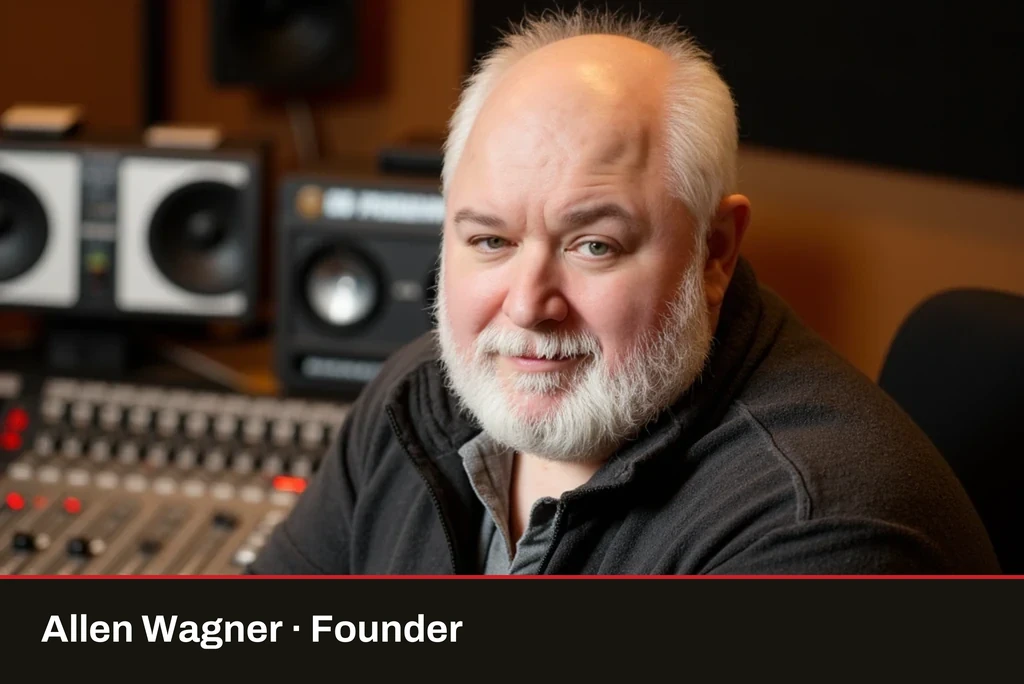
“I'd love to learn about you and your business.”
Ten minutes, and it's mostly me asking what you do, where you do it, and what you've already tried. No pitch deck, no discovery fee, no sales pressure.
Send the form on the rightbelow and I'll set up a call. If we're not a fit I'll tell you right up front and do my best to point you in the right direction.
Call me instead (360) 467-6957