
Healthcare
Marketing for Healthcare Practices
Years of training in how to treat people, and not one class on how to fill a schedule. What that gap costs, and the rules that make this market different from every other one we work in.
Who this is for
Nobody taught you this part, and it wasn’t an oversight.
The training is years long, and all of it is about the medicine.
- A doctor goes to medical school.
- A chiropractor goes to chiropractic college.
- A dentist goes to dental school.
Years of it, learning to find what’s wrong with somebody and fix it, which is difficult and worth doing and exactly what the training is for.
Not one class on how to fill a schedule.
None on what the fight with insurance companies is going to be like when you want to get paid. None on how hard it can be to qualify for a lease so you have somewhere to practice at all.
You come out qualified to treat people and unprepared for every other part of running the place where you treat them.
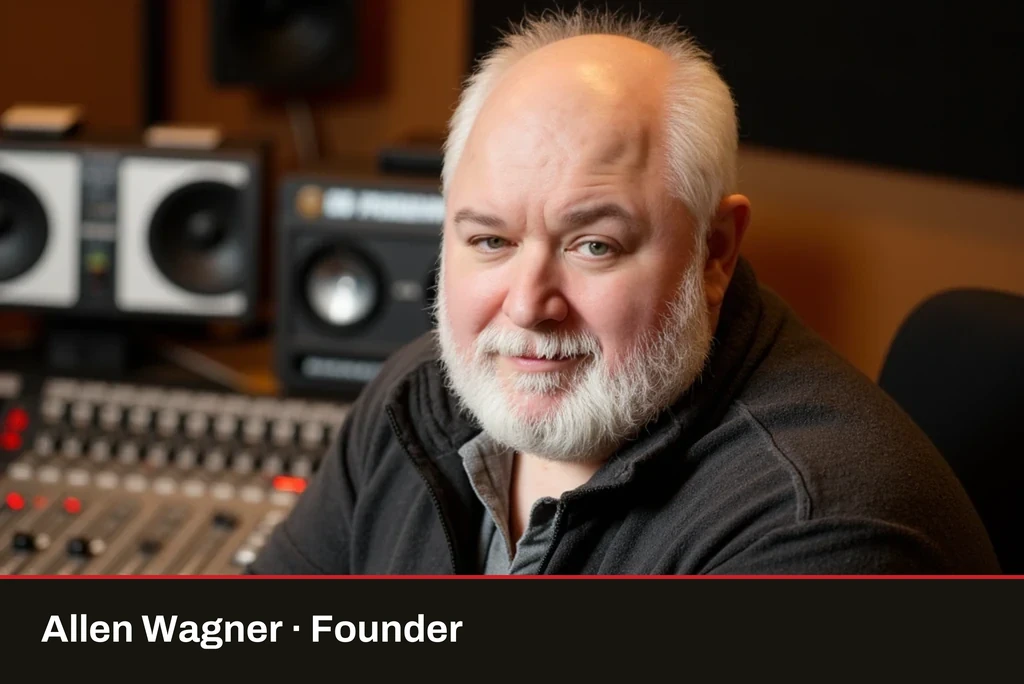
We know how thin that gap is, because we stood in it and taught into it. Our founder was the featured guest speaker on medical practice marketing at Western States Chiropractic College in Portland, three years running, to students in their final year. That talk was the only marketing instruction those students received.
He spoke there from 2007 to 2010, which straddles the year the school became the University of Western States. It’s the second-oldest chiropractic university in the world.

“Three years running I stood in front of a graduating class and asked how they planned to find patients. The answer, almost every time, was some version of if you build it, they will come. They genuinely believed that being good enough at the work would be enough, and that growth would simply follow. That belief doesn’t survive the first month of an empty schedule.”
 · guest speaker on medical practice marketing, 2007 to 2010
That belief is the expensive part, and it isn’t arrogance. It’s what you get when nobody ever tells you otherwise. Then the doors open, and there’s a schedule with nothing in it and no clear answer about where the first patients come from.
A practice needs patients the way any business needs customers.
Somebody with a bad back or a tooth that hurts does exactly what everybody does when something matters. They:
- Pick up the phone
- Start looking for who’s qualified
- Who’s close
- What other people say about them
That last one is reviews, and it decides more than most practitioners expect.
Effective marketing matters as much for a medical practice as it does for a plumber.
What differs is the rules you have to follow while doing it.
Why healthcare is its own challenge
The rules that apply to you don’t apply to anybody else we work with.
Most marketing sold to clinics is the same marketing sold to contractors, with the nouns changed. That’s not a style complaint. Some of it is advice a regulator has already fined people for taking.
Replying to a review can itself be a disclosure
A response that confirms somebody was a patient is a disclosure, whatever else it says. Regulators have brought enforcement actions against practices over exactly that, including cases where the reply named a reviewer who had used only a screen name, or added visit detail the reviewer never mentioned.
The proof you’re allowed to use is narrower
Federal guidance on health claims is explicit that consumer experience and practitioner observation are never enough to substantiate a claim about what a treatment does. Reviews still matter here. What they can be used to say is narrower than in any other market we work in.
Most agencies have never read either rule
They aren’t being reckless on purpose. They’re applying a playbook that works everywhere else and has never been checked against a rule that only applies to you. The result reads fine and can create an exposure you’re the one carrying.
So the reviews service is different here, and we sit down before we sell it
Review Patrol is the one thing we won’t run for a practice off a standard playbook. What a reply can say, who signs it off, and how the asking is done all get worked out with you before anything goes live, and that conversation happens before you buy rather than after. The service itself, and what changes for a practice, is here.
None of this is legal advice and we’re not the people to give it. Your compliance obligations are yours, and where they touch what we’d publish on your behalf, we’d rather ask than assume.
One thing that’s genuinely local
Naturopathic medicine is licensed in a minority of states, and both of ours are among them. Oregon runs a dedicated board; Washington licenses through its Department of Health, and Washington’s own administrative code names the Oregon board in its reciprocity provisions.
For a naturopathic practice in this metro that isn’t trivia. It’s why a practice here has options a practice in most of the country doesn’t, and it’s the kind of thing an agency that has never noticed the river won’t know to ask about.
If you’re somewhere else, ask us and we’ll find out what applies where you are. Licensing, scope of practice and what a board permits in advertising all move state by state, and we work across the country. We’d rather look yours up before writing anything than assume it matches ours. Tell us what state you’re in and we’ll come back with the specifics.
What actually gets done
Three parts, and you’ll know which one you’re missing.
Get found
Being the practice somebody comes across when they go looking, on the map, in search results, and in the answers people now get when they ask an AI instead of Google.
That half is hereGet chosen
What happens between finding you and booking. Reviews handled the way your obligations require, a site that reads like a real practice, and a phone that gets answered.
That half is hereGet booked
The part almost nobody does. Somebody looked, didn’t book, and forgot which of the three names they liked. Getting back in front of that person costs a fraction of reaching them the first time.
That half is hereMost practices don’t need all three, and some need only one. If people are finding you and booking elsewhere, spending on visibility gets you to the same answer faster and with a bigger bill.
One constraint worth saying plainly: your board sets rules about what can appear in your advertising, and those rules are yours rather than ours. We’d rather ask what applies to you than assume it’s the same as the practice down the road.
The practices
Two of these are clients. The third isn’t, yet.
We’d rather name them than describe them. Both agreed to be named here, which is the only reason they are.
The three we’re starting with
Straight answer
When this isn’t the right call.
If you want claims we can’t support
We won’t write that a treatment cures, fixes or guarantees anything, and we’d turn down the work rather than argue about it. That standard isn’t ours, it’s the one federal guidance already sets, and you’re the one who carries it.
If your schedule is already full
Leave it alone. A practice that starts taking bookings it can’t fit turns new patients into a wait, and a wait into the reviews that undo the work.
If somebody promised you the number one spot
We aim at the top three positions in the maps in Google and keep you there, for what people actually search. Nobody can honestly promise the top spot, here or anywhere.
Book a call
“I'd love to learn about you and your business.”
Ten minutes, and it's mostly me asking what you do, where you do it, and what you've already tried. No pitch deck, no discovery fee, no sales pressure.
Send the form on the rightbelow and I'll set up a call. If we're not a fit I'll tell you right up front and do my best to point you in the right direction.
Call me instead (360) 467-6957