
Home services
Marketing for Tree Care Companies
Storm work is decided in four minutes at midnight. A removal is decided over two weeks. Same phone number, and nothing else in common.
Who this is for
Two businesses share your phone number, and only one of them can wait.
A limb through a garage roof at eleven at night is decided in about four minutes. Somebody is standing in the dark with a flashlight, working down a list of names, and the first company that answers gets the job at whatever it costs.
The other half of your work is the opposite in every way. A leaning silver maple somebody has been uneasy about for two winters, three quotes, a decision that takes two weeks of thinking. Same trucks, same crew, same phone number, and almost nothing else in common.
Most marketing advice is written for one of those and quietly breaks the other.
Why this trade is its own challenge
Nobody hiring you can judge what they’re buying.
They’re paying somebody to drop something heavy next to their house. They can’t tell a sound plan from a reckless one, they can’t read a quote, and they know it.
That has three consequences, and every one of them is a marketing problem rather than an arboriculture problem.
The storm call goes to whoever picks up
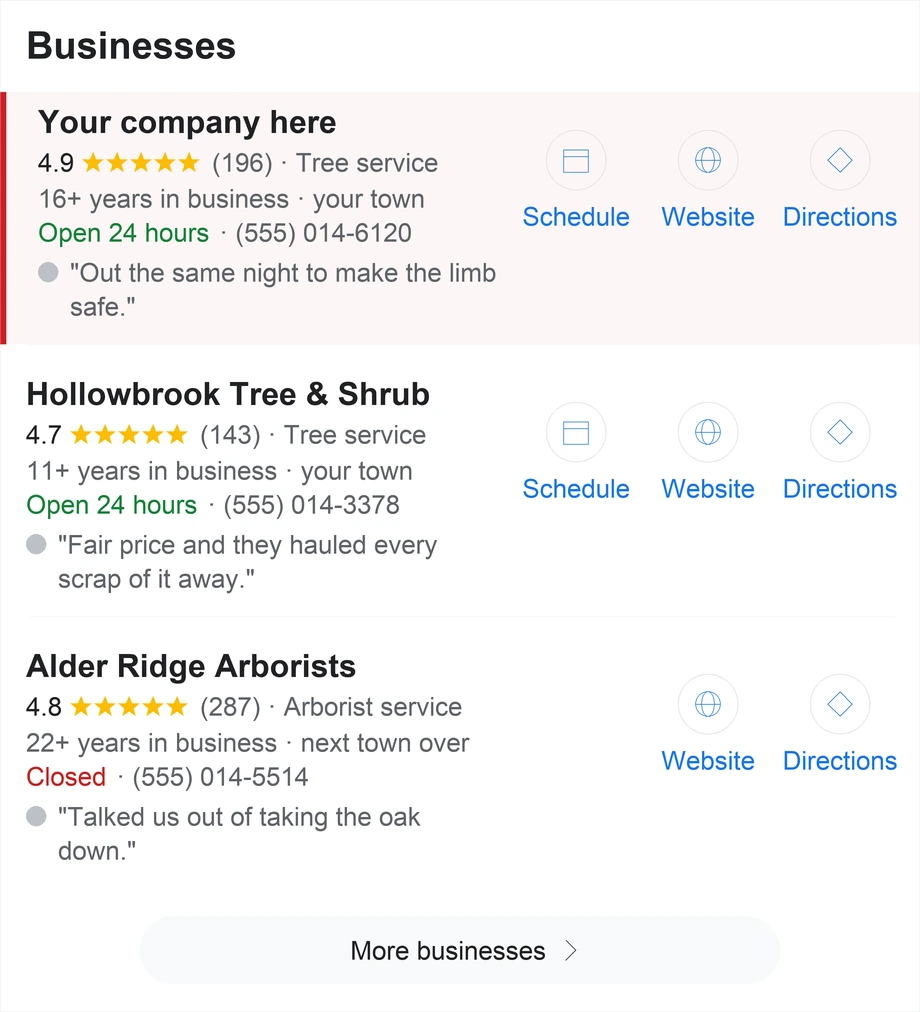
After a windstorm nobody shops around. They open the map, they call the first number, and if nobody picks up they call the second.
Voicemail at that hour is a hang-up. They’re not leaving a message about a tree on the roof, and you’ll never know they called.
So two things decide the emergency half of your year: whether you’re in the three they see in Google, and whether someone answers the phone at midnight.
Two quotes on the same tree can differ by thousands, and they can’t see why
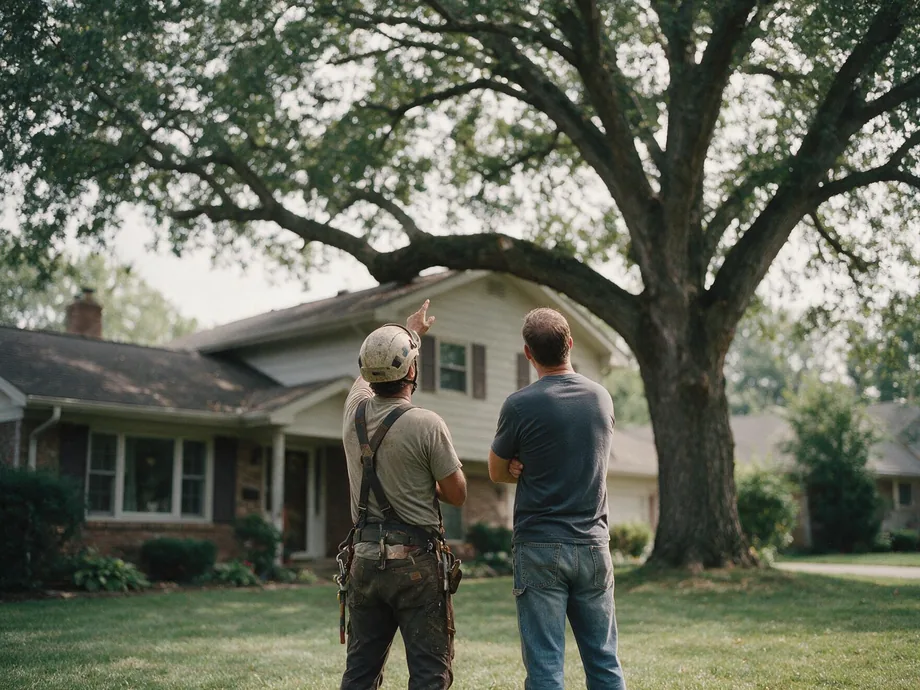
Access, what’s underneath it, how close the drop zone is to a roofline, whether it needs a crane. All of that is invisible to the person holding the quotes. So a gap of a few thousand dollars doesn’t read as two different plans for the same tree. It reads as one of you overcharging, and the cheaper quote wins by default.
When somebody can’t judge the work, they judge the company instead. Proof of insurance, whether you’re certified, whether you showed up when you said you’d be there for the estimate. A site with something on it to check does more here than in almost any other trade.
Reviews are read for the mess, not for the tree
Nobody writes about how cleanly the cut was made. They write about whether the lawn got torn up, whether the brush was hauled away, and whether anything got broken on the way down. That’s what the next reader is scanning for, because it’s what they’re afraid of.
Below about four stars most people stop considering you outright, which BrightLocal’s 2026 consumer survey puts at 68% of consumers, from 1,002 US adults. One unanswered review about a flattened flower bed outweighs a lot of good work.

Storm weeks
A windstorm puts a year of calls into five days.
The week after a real blow, every tree company in the market is at capacity and the phones don’t stop. More advertising that week buys you nothing you can service. You’re turning work away already.
What that week actually decides is who gets called next time, and who picks up the planned work that follows it. People who watched you make a limb safe at midnight remember it in April when they finally deal with the tree they’ve been putting off.
So the storm isn’t the business. It’s the advertisement for the business, and the fifty-one other weeks are where the margin lives: the removals, the cyclical pruning, the customers who call you first because you’re already in their phone.
Where a tree service usually starts
Answer the storm calls, then win the work that isn’t urgent.
Almost nobody should buy all of it at once, and for tree work the emergency half sets the order.
In the order it usually makes sense
Everything we do is listed here, and how pricing works is on the homepage, including why we won’t quote a number before we’ve looked at your business.
Client spotlight
Building the website was the last thing we did.
Legacy Tree Care had been in business since 2005 without a website. Every job came from a referral, which means the feast and famine that every referral-only business knows: stretches where the crews are booked solid, stretches where the phone doesn’t ring, and no way to change which one you’re in.
They were doing residential and commercial work both, so the first decision wasn’t a design decision. We looked at their market and at the work they actually wanted, and repositioned them as commercial specialists. That narrows who you’re talking to, which is what makes everything after that possible.

Then the brand, because now we knew who it was for. We designed the logo, the color palette and the whole look and feel around a commercial buyer rather than a homeowner.
The 100-page High Performance Authority Site came last, and it was built to dominate the commercial side of that market, because that’s one of the best reasons to build at that size. Looking like the most established company in your market is another, and at a hundred pages you don’t have to claim it.
The nearer-term job was simpler than the search one. After twenty-one years in business they still had nowhere to send somebody who wanted to check them out before calling. Search compounds over time and it’s built in for exactly that reason. A real place to point people worked the day it launched. The oldest new company we’ve ever launched.
If this site were a car it would be a high-performance Indy 500 race car. Everything we know how to build went into it. The page is on screen in about seven tenths of a second. It looks as good on a phone as it does on a laptop. Every phone number on it is click-to-call, and on mobile a call button stays pinned to the bottom of the screen the entire time somebody is scrolling, so calling them is never more than one thumb away.
What that adds up to is a brand. A company with a mark of its own, a page for every service and an answer for every question stops reading like a truck with a phone number on the door and starts reading like the established firm in that market. That’s the durable part, and it belongs to them rather than to us.
Check it out for yourself. The site is live, you can open it right now, and you can read every page of it.

Legacy Tree Care · commercial tree service, Plano, Texas
Brand identity and a hundred-page build, live since August 2026. See the site
Why a hundred pages, and not ten
The site does two jobs at once. Half of it sells the services, the way a finely-tuned authority site does: removal, pruning, storm work, stump grinding, plant health, each with somewhere of its own to land.
The other half is a reference for the people who actually sign off on commercial tree work. A property manager needs current answers on city and county ordinances, on permitting, and on what’s allowed at the sites they’re responsible for. Most of the competition in that market was running a basic 10- to 20-page site with nothing on it to answer any of that.
A hundred pages is what it takes to be the one that does. That’s what building at this size is for: being the only company in the market that has already answered every question a buyer has, before they call anybody.
Straight answer
When this isn’t the right call.
If you’re one crew and booked into next month
More calls you can’t reach turn into missed appointments and the reviews that follow them. On this list that’s the one thing that’s genuinely hard to undo.
If you can’t show proof of insurance
Then fix that first. It’s the first thing a careful buyer asks a tree company for, and no amount of marketing survives not having an answer.
If somebody promised you the number one spot
We aim at the top three positions in the maps in Google and keep you there, for what people actually search. On a storm night the caller works down all three anyway.
Answered after the storm, and still there when they decide.
- Calls that used to go to voicemail get answered.
- You show up in Google when people search after a storm.
- The removals you quote stop disappearing, because you’re still in front of that customer while they decide.
In a trade where one removal can be worth several thousand dollars, it doesn’t take many extra jobs to cover what you’re paying us.
You’ll see it in two numbers you can count without us: how many calls came in, and how many contact requests came from your website. Not website visitors, not a bunch of fancy, multicolored charts and graphs in a ranking report.
No long-term contract. You stop at the end of the month on almost everything; search is the one exception and takes sixty days’ written notice, because it’s booked ahead.
Frequently Asked Questions
The things worth asking before you buy.
Can you get us to the top of Google for tree service in our city?
Yes, into the top three of the local map pack, and we keep you there. That's the block of three businesses that shows above the ordinary results with the map beside it, and it's where the calls come from. You don't need to be first. You need to be one of the three.
The one thing we won't promise is the number one spot, because a position moves with who's searching and where they're standing. Anybody selling you number one is selling you a screenshot.
A ranking promise only means something if it answers two questions: for what, and where. For what, because it's easy to rank a business first for a phrase nobody types, and that's how a ranking guarantee is usually kept. We go after what somebody actually searches when they need you today. And where, because a business ranks in a shape around its address, not everywhere at once. For most that's somewhere between three and seven miles out, depending on how tightly Google draws the map where you are.
And you'll know without taking our word for it. You count the calls and the contact requests from your website. Search takes somewhere between thirty and ninety days to show. If it hasn't, give us our sixty days' written notice.
Read more on this topic: Reading a guarantee before you sign one
Most of the trees we get called about don't need to come out. Won't marketing push us to sell removals?
No, and the company that says so out loud usually wins the next three jobs. Telling somebody their tree is worth keeping costs you one invoice and buys you the person who tells their street about you. That's not a marketing trick, it's the reason referrals exist in this trade.
Nothing we run asks you to sell anything you wouldn't recommend. What it does is put you in front of people at the moment they're deciding, and make it easy to check that you're real. What you tell them once you're standing under the tree is your business, and the honest answer is the one that compounds.
Our work comes in after storms. Is there anything worth doing the rest of the year?
The rest of the year is where the margin is. Storm weeks are already at capacity, and more advertising during one buys work you can't service. What the storm does is introduce you to people who'll need planned work later.
The steady half of the calendar is removals people have been putting off, cyclical pruning, and customers who call you first because you're already in their phone. That's what search, reviews and follow-up are for, and it's why starting in the quiet part of the year works better than starting in the busy one.
What if we can't keep up with the extra work?
Then don't start with the things that turn the volume up. Booking work you can't reach turns into missed appointments and the reviews that follow them, which is the hardest thing on this list to undo.
If you're one crew already booked into next month, the honest advice is to fix answering and reviews first and leave the rest alone until there's capacity behind it.
Read more on this topic: When more work is the wrong answer
What if we want to reach further than three to seven miles?
You can, and it costs more per job for as long as you keep doing it. A business ranks in a shape around its address, so reaching past that shape means paying for reach rather than earning it.
For tree work the drive matters less than it does on a route business, since the jobs are bigger and less frequent. But a crane job forty minutes out still eats a morning in transit, and the emergency work almost never comes from that far away.
Read more on this topic: How far the map carries, and taking on a second area
Book a call
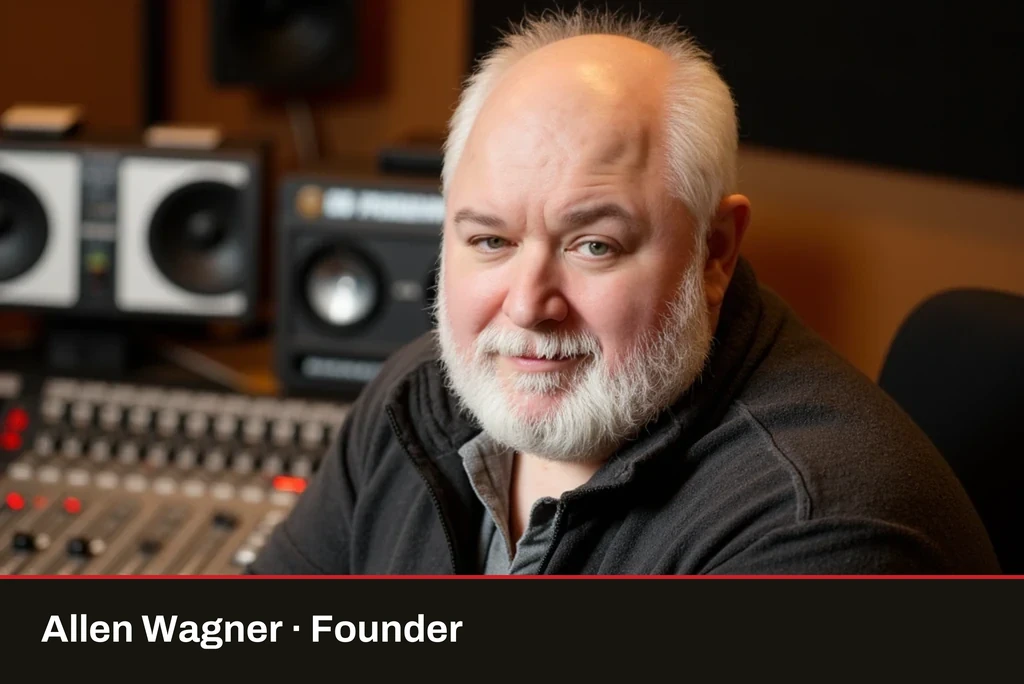
“I'd love to learn about you and your business.”
Ten minutes, and it's mostly me asking what you do, where you do it, and what you've already tried. No pitch deck, no discovery fee, no sales pressure.
Send the form on the rightbelow and I'll set up a call. If we're not a fit I'll tell you right up front and do my best to point you in the right direction.
Call me instead (360) 467-6957