
Because a customer in your trade is worth a lot, your competitors know it, and every click is an auction they’re all bidding in. A twenty-dollar click isn’t a price somebody set. It’s what the last business willing to pay it decided a job was worth. This is the long version of a question on the page about paid ads, where the short answer is the same one.
What follows is how the price actually forms, why some categories run ten times higher than others, and the three levers that genuinely lower what you pay.
It’s an auction, and the bidders are your competitors
Nobody at the platform decides what a click in your trade costs. Businesses like yours do, by bidding, thousands of times a day.
If a new roof is worth several thousand dollars and one in twenty clicks becomes a customer, a roofer can rationally pay a great deal per click and still profit. So they do. And once one of them works that out, the rest have to match it or disappear.
That’s why the expensive categories are expensive: legal, insurance, medical, and the higher-value home services. It isn’t that the platform charges them more. It’s that a single customer is worth enough to justify it, and everyone bidding knows the same arithmetic.
Why it keeps rising
Three things push the same direction.
More businesses bidding. Every trade that discovers this channel adds another bidder to the same auction, and nobody leaves quietly.
Less free space on the page. Map results and assembled answers have pushed the ordinary results further down. Businesses that used to get calls without paying now buy their way back to where they were, which puts more money into the auction.
Better measurement. When a business can prove a click became a customer, it will pay closer to what that customer is worth. Precision drives prices up, not down.
None of that reverses. Planning on the assumption that clicks get cheaper is planning on something that has never happened.
Which is why digital marketing for small businesses that leans entirely on this channel gets more expensive every year by design. The auction is the one part of the plan nobody can negotiate with.
What the price is actually telling you
An expensive click is a signal, not an insult.
High prices mean the customers are valuable and somebody has proven it. A trade where clicks cost two dollars is often a trade where the work is worth two dollars of attention.
The question is never whether the click is expensive. It’s whether it’s expensive relative to what a customer is worth to you, and that’s a calculation only you can do.
If one job is worth $4,000 and you close one in ten, a $40 click is cheap.
The three levers that actually work
You can’t lower what your competitors bid. You can change almost everything else.
Stop paying for clicks that were never going to convert. This is the biggest one by a distance. Broad matching sends you people searching how to do the job themselves, people outside your area, and people looking for work rather than work done. Negative keywords are unglamorous and they routinely cut waste by a third.
Improve where the click lands. The platforms reward relevance with lower prices, and a page that matches what somebody searched costs less per click than a homepage that doesn’t. Doubling your conversion rate has exactly the same effect on cost per customer as halving the click price, and it’s the half you control.
Narrow the ground. Bidding across a whole metro when you work in four towns means paying metro prices for suburban work. Tightening the radius often drops the average cost immediately.
None of those three involve outbidding anybody, which is the point. The businesses paying least per customer are rarely the ones bidding hardest.
When the honest answer is to walk away
Sometimes the arithmetic doesn’t work and no amount of management fixes it.
If clicks cost thirty dollars, you close one in fifteen, and a customer is worth two hundred, you’re paying four hundred and fifty dollars to earn two hundred. That isn’t a campaign problem. It’s a market where your competitors can afford more than you can, usually because their average job is bigger.
The response is to compete somewhere the auction isn’t. Your listing, your reviews and the pages that get found without bidding cost the same whatever your competitors spend, which is the one genuine advantage a smaller business has here.
What we’d tell you on the phone
Work out what a customer is worth and what you close, before looking at any click price. Those two numbers tell you whether this channel is open to you, and they take ten minutes.
If the numbers don’t work, we’ll say so rather than sell you a smaller version of something that doesn’t fit. A campaign that loses money slowly is worse than no campaign, because it takes longer to find out.



Book a call
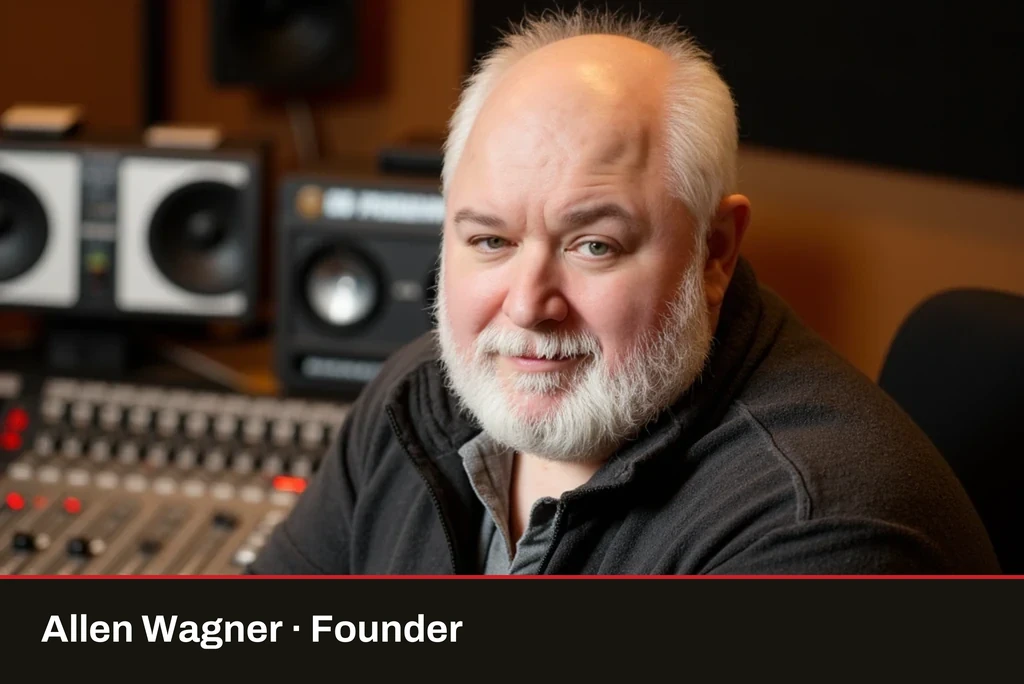
“I'd love to learn about you and your business.”
Ten minutes, and it's mostly me asking what you do, where you do it, and what you've already tried. No pitch deck, no discovery fee, no sales pressure.
Send the form on the rightbelow and I'll set up a call. If we're not a fit I'll tell you right up front and do my best to point you in the right direction.
Call me instead (360) 467-6957