
Some will, some won’t, and we tell them anyway. The answering system announces itself up front, because pretending otherwise is bad manners, and because the law in this area is tightening in exactly one direction. This is the long version of a question on the page about AI phone answering, where the short answer is the same one.
The honest version of this answer has three parts: what callers actually notice, why disclosure isn’t optional, and the cases where a human is simply the right answer.
What callers actually notice
Voice quality stopped being the tell a while ago. What gives it away now is behavior. People notice when an answering system interrupts them, when it can’t handle being asked something sideways, when it repeats a question it already asked, and when it clearly wants them to say one of three words.
What they don’t notice, in our experience, is a system that picks up on the second ring, knows what the business does, lets them finish a sentence, and gets the details right. Callers who are treated well tend not to interrogate the thing that treated them well.
The comparison that matters isn’t AI against a great receptionist. It’s AI against what actually happens now, which for most local businesses is voicemail, a phone ringing out in a van, or an off-shore message-take that gets the address wrong.
Where we stand on this
It identifies itself. That isn’t a concession, it’s the design.
A caller who finds out mid-conversation that they’ve been talking to software feels tricked, and the feeling attaches to your business, not to us. The cost of that is much higher than the small number of people who would rather wait for a human.
The law is moving in one direction here. California already makes it unlawful to use a bot to mislead somebody about its artificial identity in a commercial transaction online, unless it says so plainly (Bus. & Prof. Code § 17941). That statute is written for online interactions rather than inbound phone calls, so it isn’t the rule that governs this, but it’s a clear signal of where the line is being drawn. On the outbound side the FCC already treats AI-generated voices as artificial under the TCPA, which is a much heavier restriction than anything inbound faces.
A system built to disclose doesn’t need rebuilding when the next state passes something. One built to pass as human does.
If you want a system that hides what it is, we’re not the right supplier.
Why disclosure isn’t only a legal question
There’s a practical reason too. A caller who knows they’re talking to an automated system talks differently: more clearly, more directly, and with less small talk. Disclosure makes the call go better, not worse.
It also sets the right expectation about escalation. Somebody who knows what they’re speaking to will ask for a human when they need one, instead of getting increasingly frustrated with a system that was never going to understand their situation.
That’s the design brief, and it isn’t a technical one. Anything MegaVoxx puts in front of a customer has to survive the moment they work out what it is.
What it’s genuinely good at
Answering at 9pm on a Sunday. Answering the fourth simultaneous call when the storm hits and every one of your competitors is on voicemail. Taking a name, a number, an address and a description of the problem, accurately, every single time, and putting it somewhere you’ll see it.
Booking into a live calendar, so the caller gets a time rather than a promise of a callback. Answering the same eight questions it’s been asked all week (hours, service area, whether you charge for estimates, whether you handle that brand) without getting bored on the two hundredth repetition.
What it isn’t good at
Genuine emergencies with a distressed caller. Somebody standing in six inches of water needs a person. A good system’s job in that moment is to recognize it and escalate fast, not to work through a script.
Complicated quoting. Anything that needs judgment about a specific job, a negotiation, or a sensitive conversation about money belongs with a human who can be held to what they said.
Regulars who know your staff by name. If a large share of your calls are from long-standing customers with an existing relationship, routing them to software is a downgrade they’ll feel.
None of that is a reason to leave the phone unanswered the rest of the time. It’s a reason to be clear about which calls go where.
The question underneath the question
When owners ask whether callers will know, what they usually mean is: will this make my business look cheap?
The thing that makes a business look cheap is a phone nobody answers. Missed calls don’t leave a message; they call the next name on the list. An owner worrying about the polish of an answered call has already solved the problem that was actually costing money.
What we’d tell you on the phone
Call it yourself before you decide. Ask it something awkward. Ask it something it wasn’t set up for, and watch how it hands you off. That’s the honest test, and it’s a better basis for a decision than anybody’s demo.
If it doesn’t hold up, don’t buy it. We’d rather lose the sale than have you find out in front of a customer, which is the same reason the price is published rather than waiting to be discovered on a call.



Book a call
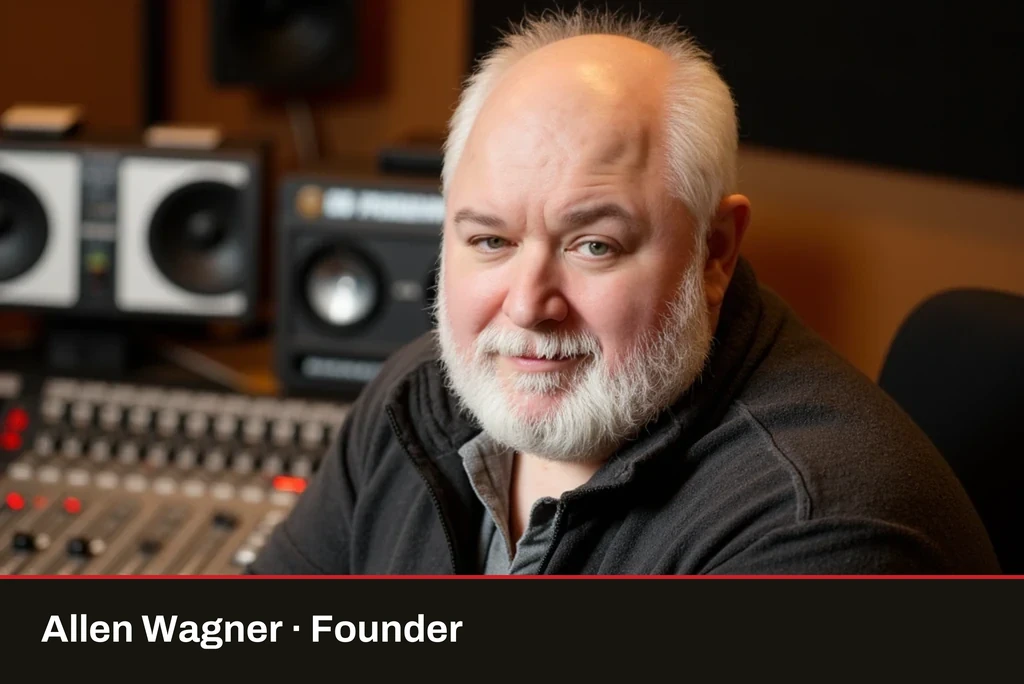
“I'd love to learn about you and your business.”
Ten minutes, and it's mostly me asking what you do, where you do it, and what you've already tried. No pitch deck, no discovery fee, no sales pressure.
Send the form on the rightbelow and I'll set up a call. If we're not a fit I'll tell you right up front and do my best to point you in the right direction.
Call me instead (360) 467-6957